
Narrow Therapeutic Index: Why Some Drugs Demand Precision
When a drug has a narrow therapeutic index, the difference between a safe dose and a toxic one is very small. Also known as a narrow therapeutic window, it means your body can’t tolerate much variation—too little and the drug does nothing, too much and it harms you. This isn’t about side effects you can shrug off. It’s about life-or-death precision. Drugs like warfarin, lithium, digoxin, and cyclosporine sit in this zone. They’re powerful, but they leave no room for error.
Why does this matter so much? Because even small changes in how your body absorbs or breaks down the drug can push you over the edge. A generic version might be chemically identical, but if it’s absorbed a little faster or slower, it can trigger toxicity or treatment failure. That’s why bioequivalence isn’t just a technical term—it’s a safety requirement. The FDA requires strict testing to prove generics with a narrow therapeutic index deliver the same amount of drug into your bloodstream as the brand name. But even then, switching between brands or generics can still cause problems for some people. That’s why doctors often stick to one brand for these drugs, and why pharmacists flag them when refilling prescriptions.
It’s not just about generics, either. Age, liver or kidney function, other medications, even what you eat can shift your therapeutic window. A senior on lithium might need a lower dose after starting a new blood pressure pill. Someone on warfarin might bleed after eating a big salad—vitamin K changes how the drug works. These aren’t rare cases. They happen every day in clinics and hospitals. And that’s why you’ll find articles here about drug interactions, medication-induced delirium in older adults, and how insurers pick which generics to cover. You’ll also see posts on nitrosamine contamination and generic manufacturing standards—because when a drug has a narrow therapeutic index, quality isn’t optional. It’s the only thing standing between recovery and crisis.
What you’ll find below isn’t just a list of articles. It’s a practical toolkit for understanding why some drugs demand more attention than others. Whether you’re a patient, caregiver, or clinician, knowing which drugs fall into this category—and why—can change everything.
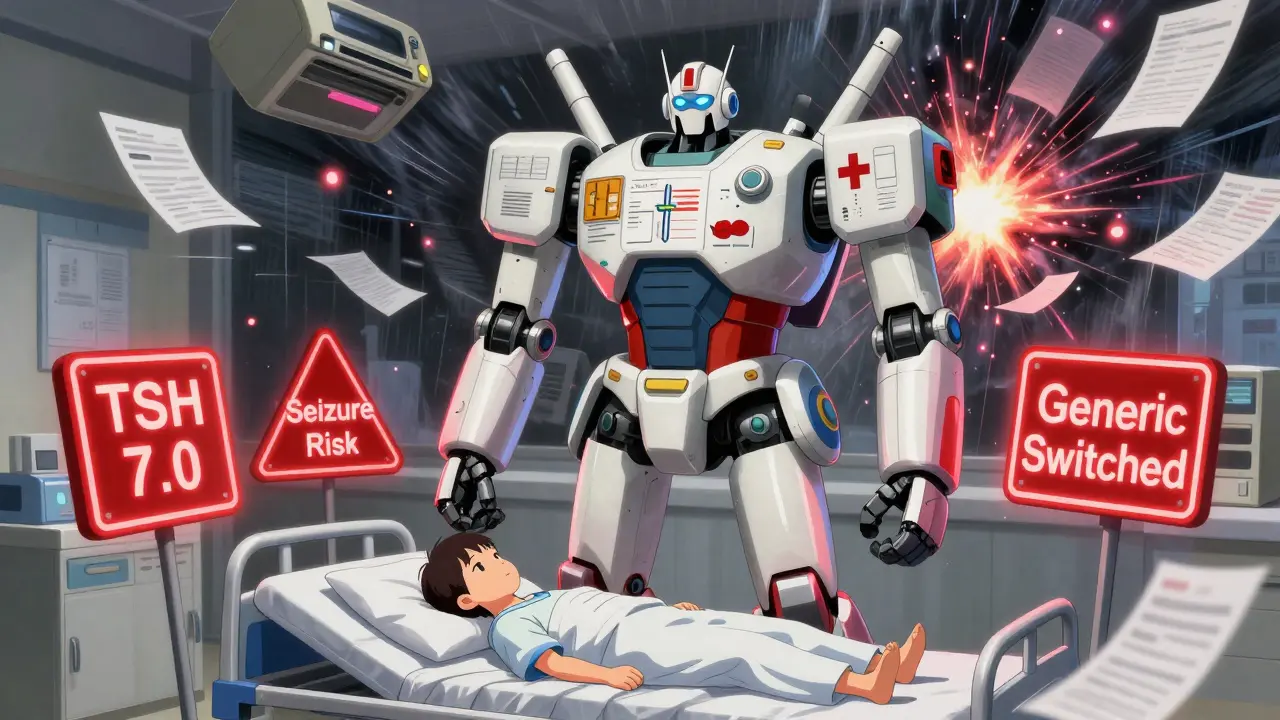
Prior Authorization for NTI Drugs: When Insurers Require Brand-Name Medications
Why Some People React Differently to Generic Medications
