

Why the FDA Shows Up Without Warning
If you work in pharmaceutical manufacturing, medical device production, or even food processing, you’ve probably heard the phrase unannounced FDA inspections. But what does it really mean-and why does it matter so much? The short answer: it’s the FDA’s way of cutting through the noise. They don’t want to see what you’ve cleaned up for the visit. They want to see what you do every single day.
Starting May 6, 2025, the FDA made a major shift: all foreign manufacturing facilities supplying products to the U.S. are now subject to unannounced inspections, just like domestic ones. Before that, foreign plants often got weeks of notice. That gave them time to polish records, hire extra staff, or even rearrange production lines. The FDA found that when they gave advance notice, serious violations were found more than twice as often as during surprise visits. That’s not a coincidence. It’s a red flag.
How an Unannounced Inspection Actually Works
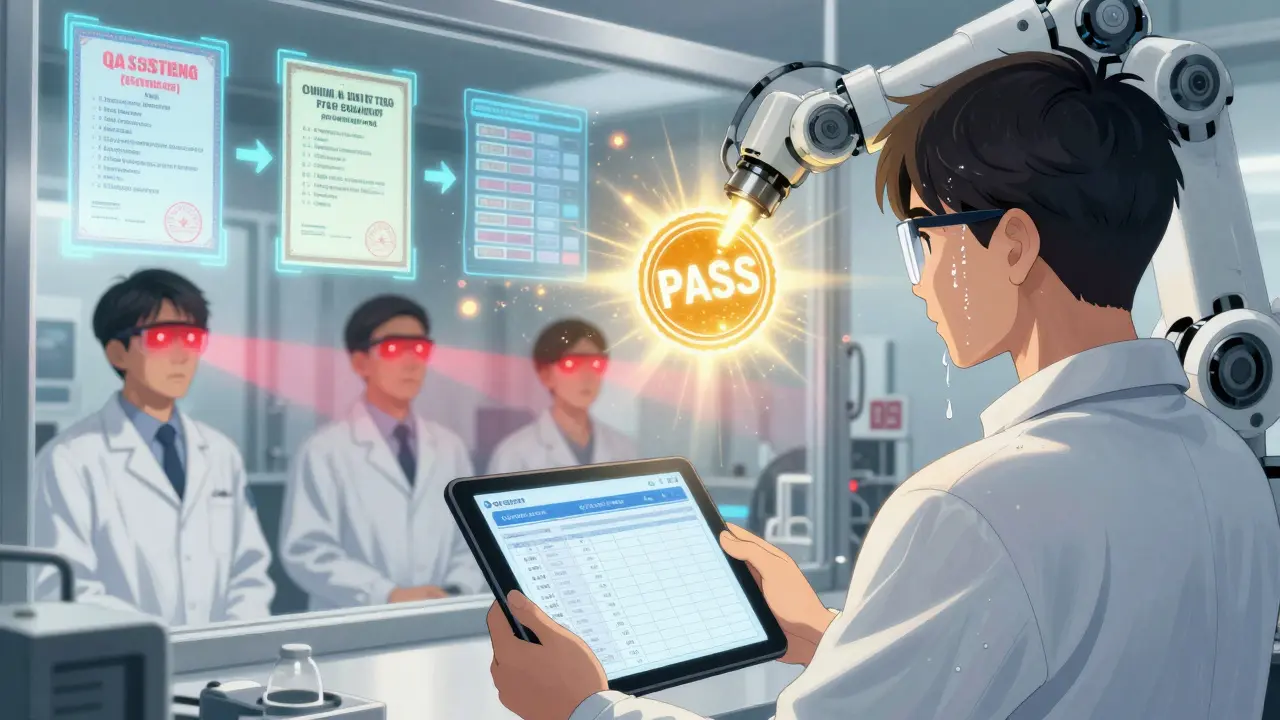
There’s no phone call. No email. No “we’ll be there tomorrow.” One day, two FDA inspectors walk into your facility, show their credentials, and hand you Form FDA 482-the official Notice of Inspection. From that moment, your facility is under scrutiny. No prep time. No do-overs.
The inspectors will ask to see everything: your Standard Operating Procedures (SOPs), batch records, equipment maintenance logs, training files, and even your complaint handling system. They’ll walk through your cleanrooms, check your sterilization processes, and verify that your quality control tests match what’s written down. If you’re making injectables, they’ll want to see how you control contamination. If you’re packaging pills, they’ll check your labeling accuracy.
The length of the inspection depends on your size, complexity, and how messy things look. A small facility with clean records might be done in a day. A large plant with multiple product lines and history of issues? That could take weeks. But here’s the key: the FDA doesn’t need to find a smoking gun to take action. Even a “No Action Indicated” report gives them data. It tells them whether your facility is reliably compliant-or just lucky.
The Double Standard That Got Fixed
For years, there was a clear gap in how the FDA treated U.S. and foreign manufacturers. Domestic plants were routinely inspected without notice. Foreign ones? They got heads-up. Why? Because of logistics-travel, translators, coordination with local regulators. But that system had a flaw: it gave foreign companies an unfair advantage. They could prepare. They could hide. And the FDA kept finding more serious problems in foreign facilities than domestic ones-especially when they knew the visit was coming.
The May 2025 policy change closed that gap. Now, whether you’re in Cincinnati or Chennai, you’re held to the same standard. The FDA calls it “regulatory parity.” Industry experts call it long overdue. McGuireWoods, a law firm tracking FDA policy, noted this move ensures foreign manufacturers “are held to the same standards and oversight as domestic companies.” That’s not just fair-it’s necessary. About 80% of the active ingredients in U.S. medicines come from overseas. If you’re not checking them the same way, you’re not protecting patients.
What Happens If You’re Not Ready?
Here’s the hard truth: if your quality system is built on last-minute fixes, you’re already behind. The FDA doesn’t care if your documentation was perfect last week. They care if it’s perfect today. And if your staff doesn’t know what to do when inspectors walk in, you’re at risk.
Common mistakes? Inconsistent recordkeeping. Missing training logs. Outdated SOPs. Bottlenecks in your complaint system. Or worse-falsifying data. The FDA has made it clear: they’re targeting those who “falsify records or conceal violations.” And they have the authority to block imports, issue warning letters, or even shut down operations if they find serious breaches.
One real example from 2025 involved a sterile injectable manufacturer in India. During an unannounced inspection, FDA investigators requested access to the aseptic filling area. The team had never practiced responding to an unannounced visit. The air filtration system was running at 80% efficiency-not 100%. The temperature log showed a 2-hour gap. The inspector didn’t need to find a single contaminated vial. The system failures alone were enough to trigger a Form 483 with 12 observations.
How to Prepare (Without Going Crazy)
You don’t need to be perfect. You need to be consistent. Here’s what actually works:
- Run mock inspections monthly. Bring in someone from another department-or hire a consultant-to show up unannounced. See how your team reacts. Do they know who to call? Where to find records? Can they explain their SOPs in plain English?
- Use quality management software. Manual spreadsheets won’t cut it. You need a system that tracks changes, logs training, and flags expired documents automatically. Greenlight Guru calls it “guardrails”-software that protects you even when you’re not looking.
- Train everyone, not just QA. The person cleaning the floor might be the first one to see an inspector. They need to know how to respond: “I’ll get my supervisor.” No guessing. No panic.
- Keep records real-time. Don’t wait until the end of the shift to log data. Don’t backdate entries. The FDA can spot that. They’ve seen it before.
- Review complaints daily. If you’re getting the same complaint about a label error or a broken seal, fix it. Don’t wait for the FDA to find it.
Companies that do this don’t just survive inspections-they thrive. They build trust. They avoid delays. And they keep their products on the shelf.
What About Language and Foreign Regulators?
One big question still hanging is how the FDA will handle language barriers and coordination with foreign authorities. Before May 2025, the FDA often notified the local food or drug regulator in countries like China or India before visiting. They even invited them to observe. Now, with unannounced visits, that’s not possible.
Some experts worry this could create diplomatic friction. Others argue it’s unnecessary-the FDA doesn’t need foreign approval to enforce U.S. law. But the practical reality? If your team doesn’t have a translator ready, the inspection could stall. That’s why top manufacturers now train bilingual staff to handle inspections on the spot. They also keep translated versions of key SOPs and forms available.
The FDA hasn’t said whether they’ll continue coordinating with foreign agencies. But they’ve made it clear: they’re not backing down. If you’re exporting to the U.S., you’re under their jurisdiction. Period.

This Isn’t Just About Compliance-It’s About Trust
At its core, unannounced inspections aren’t about catching people doing something wrong. They’re about proving that most companies aren’t doing anything wrong. That the system works. That when you buy a pill, a vaccine, or a baby formula, it’s safe-not because someone cleaned up for a visit, but because the system is built to be reliable every day.
The FDA says this new approach is “stronger, smarter, and unapologetically in support of the public health and safety of Americans.” And they’re right. With more than 3,000 foreign inspections happening every year, and 40% of finished drugs made overseas, the stakes couldn’t be higher.
If you’re in manufacturing, this isn’t a threat. It’s a benchmark. It’s a signal that the bar has been raised-and if you’re ready, you’ll be the one others look up to. If you’re not? You’ll be the one explaining why.
Frequently Asked Questions
Are all FDA inspections unannounced?
No. Most inspections are unannounced, but there are exceptions. For example, inspections of Class II or Class III medical device manufacturers are often announced every two years. Pre-announced visits also happen in specific programs where records need to be pulled from archives or translators must be arranged. But for quality system audits and “for cause” inspections, the FDA almost always shows up without warning.
What happens if a facility refuses an unannounced inspection?
Refusing an FDA inspection is a serious violation. The agency has legal authority to block imports, issue injunctions, or pursue criminal charges. If a facility delays, denies, or limits access, the FDA can immediately flag the company as non-compliant. Products may be detained at the border, and future shipments could be automatically refused. In extreme cases, the company could be placed on the FDA’s Import Alert list, effectively banning them from the U.S. market.
Do unannounced inspections only target foreign manufacturers?
No. Domestic facilities have always been subject to unannounced inspections. The May 2025 change extended the same policy to foreign manufacturers, eliminating the previous double standard. Now, whether you’re in the U.S. or overseas, if you supply products to American consumers, you’re subject to surprise visits.
How often do unannounced inspections happen?
There’s no fixed schedule. The FDA uses a risk-based system. High-risk facilities-those with past violations, complex products like sterile injectables, or a history of recalls-are inspected more frequently. The FDA has stated it will increase the frequency of unannounced inspections at foreign facilities. Some high-risk plants may be visited annually. Others with clean records might go several years between visits.
Can a company appeal an inspection result?
You can respond to a Form 483 observation within 15 days with a written corrective action plan. But you can’t appeal the inspection itself. The FDA doesn’t “re-do” inspections. What matters is how you fix the issues. If your response is thorough, timely, and shows real change, the FDA may close the case. If it’s vague or incomplete, they may issue a Warning Letter-or worse.
What Comes Next?
The FDA isn’t slowing down. With the new policy fully in effect, expect more unannounced visits, tighter scrutiny of foreign supply chains, and increased use of data analytics to target high-risk facilities. Companies that treat compliance as a checklist are already falling behind. Those that build quality into every process-every day-will not only survive but lead.
The message is clear: if you want to sell in the U.S., you need to operate like you’re always being watched. Because you are.
Jake Moore
January 19, 2026 AT 08:21Mock inspections monthly? Yes. Quality software? Absolutely. Training floor staff? Long overdue. This isn't bureaucracy-it's basic responsibility.
rachel bellet
January 20, 2026 AT 06:41They cite ‘40% of finished drugs made overseas’ like it’s a justification for authoritarianism. But where’s the data showing that pre-announced inspections actually led to more deaths? Nowhere. Because it doesn’t exist. This is performative enforcement dressed up as public health.
Praseetha Pn
January 20, 2026 AT 23:51And don’t even get me started on the translators. They don’t need them-they need bribes. I know people who’ve been blackmailed by inspectors for ‘language assistance fees’. This isn’t regulation. It’s extortion with a badge.
Nishant Sonuley
January 21, 2026 AT 02:13My cousin runs a small API plant in Hyderabad. He started doing unannounced mock drills after the 2023 warning letter. His team now responds like a SWAT unit. No panic. No lies. Just clean logs and calm answers. They got a clean Form 483 last month. No fines. No delays. Just business. That’s what this is about: turning panic into process.
Emma #########
January 23, 2026 AT 00:58Andrew Short
January 24, 2026 AT 08:28And you call this ‘public health’? Tell that to the patients who can’t get their insulin because some bureaucrat in Rockville decided a printer was ‘out of calibration’. This isn’t safety. It’s bureaucratic terrorism.
christian Espinola
January 25, 2026 AT 22:00And let’s not forget: most foreign plants are inspected by people who’ve never set foot in a cleanroom. They read SOPs like they’re novels. They don’t know the difference between a laminar flow hood and a HEPA filter. But they’ll write a 12-point observation anyway. This isn’t science. It’s guesswork with authority.
Chuck Dickson
January 26, 2026 AT 02:29I’ve seen companies go from ‘we’re doomed’ to ‘we’re the model plant’ in 6 months. It’s not magic. It’s just discipline. And guess what? The FDA respects discipline. They don’t care if you’re big or small-they care if you show up ready. Be that company.
Andrew McLarren
January 27, 2026 AT 23:34Robert Cassidy
January 28, 2026 AT 11:36Meanwhile, China’s NMPA is rolling out AI-driven predictive compliance. Europe’s EMA has real-time data sharing. But no-our FDA? They send two guys with clipboards to a factory in Bangalore and call it ‘innovation’. This isn’t progress. It’s colonialism with a lab coat.
Naomi Keyes
January 29, 2026 AT 19:31Dayanara Villafuerte
January 30, 2026 AT 21:44Unannounced inspections? YES. Training floor staff? YES. Real-time logs? YES. This isn’t about fear-it’s about respect. For patients. For science. For the people who actually do the work every day without fanfare. 👏 Keep it up, FDA. We’ve got your back.
Andrew Qu
January 31, 2026 AT 17:03That means affordable software. Free training webinars. Clear translation guides. Mentorship programs. This isn’t just about enforcement-it’s about enabling. Be the regulator that helps people succeed, not just the one that punishes them for failing.
Max Sinclair
February 1, 2026 AT 19:29Let’s stop framing this as a battle between East and West. It’s about standards. And if your facility can meet them without panic, then you’re not just compliant-you’re exemplary.