

When a child breaks out in hives after eating peanut butter, or an adult gets stomach cramps after drinking milk, the question isn't just "What happened?" It's "Is this a real allergy?" That’s where the oral food challenge comes in - the only test that gives a clear, definitive answer.
Most people think skin prick tests or blood tests can confirm a food allergy. But here’s the truth: those tests get it wrong more than half the time. A 2019 study from the National Institutes of Health found that clinical history and lab tests alone have less than 50% accuracy in diagnosing food allergies. That means for every two people told they’re allergic, one might be unnecessarily avoiding foods they can safely eat. And that’s not just inconvenient - it can lead to malnutrition, anxiety, and social isolation.
Why the Oral Food Challenge Is the Gold Standard
The oral food challenge (OFC) is the most accurate way to diagnose food allergies. It’s not just another test - it’s the benchmark all others are measured against. The American Academy of Allergy, Asthma & Immunology (AAAAI), the European Academy of Allergy and Clinical Immunology (EAACI), and the Italian Society of Pediatric Allergy and Immunology (SIAIP) all agree: if you want to know for sure whether someone is allergic, you need to give them the food - under medical supervision.
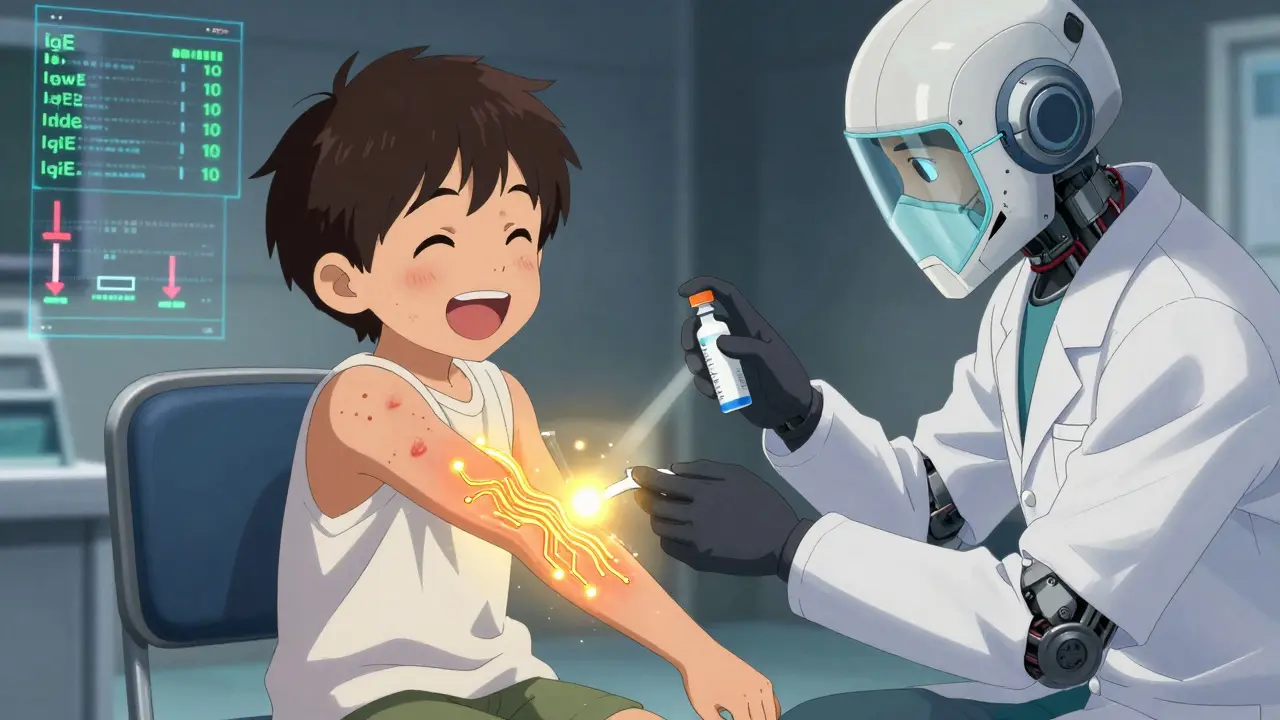
Here’s how it works: a tiny amount of the suspected food - often just 1-2 milligrams - is given to the patient. That’s about one-thousandth of a peanut. If nothing happens after 15-30 minutes, the dose is slowly increased. This continues until either the patient eats a full serving or a reaction occurs. The whole process takes 3 to 6 hours. During that time, doctors monitor heart rate, breathing, skin, and gut symptoms. If a reaction happens, it’s treated right there in the clinic with epinephrine, antihistamines, or oxygen - all of which are kept on hand.
Why is this better than a blood test? Because blood tests only measure antibodies - not whether those antibodies actually cause symptoms. A person might have high IgE levels to egg but never react when they eat it. The OFC cuts through the noise. It shows real-life tolerance. And that’s why, when done correctly, it’s nearly 100% accurate.
How It’s Done: Open, Blind, or Double-Blind?
There are three main ways to run an oral food challenge. The most common is the open challenge - where both the patient and the doctor know exactly what food is being given. About 90% of OFCs are done this way. It’s practical, less expensive, and works well for most families.
Then there’s the single-blind challenge. The patient doesn’t know what they’re eating - only the doctor does. This helps reduce anxiety or psychological reactions. For example, if a child has had a scary reaction before, they might panic at the sight of peanut butter, even if they’re no longer allergic. The blind format helps separate real symptoms from fear.
The double-blind placebo-controlled challenge is the strictest version. Neither the patient nor the doctor knows whether the food or a placebo (like flour or rice powder) is being given. It’s the gold standard for research, but it’s rarely used in clinics. Why? It’s complex, expensive, and takes weeks to set up. Most doctors only use it when there’s serious doubt - like when a child seems to have outgrown an allergy but the history is unclear.
Food can be given in different forms too. Sometimes it’s pure peanut butter. Other times, it’s baked into a muffin or hidden in a capsule. This matters because some people can tolerate cooked forms of an allergen (like baked egg) but not raw. The OFC can test that too.
Who Needs It - and Who Should Avoid It
Oral food challenges aren’t for everyone. They’re most useful in three situations:
- When allergy tests are inconclusive - like when IgE levels are borderline
- When a child might have outgrown an allergy - especially milk, egg, soy, or wheat
- When a family is considering removing a food from the diet but isn’t sure if it’s truly dangerous
According to FoodAllergy.org, about 65% of children with milk or egg allergies outgrow them by age five. Without an OFC, many families keep avoiding those foods for years - even when it’s no longer needed. One study found that OFCs prevent unnecessary dietary restrictions in 25-30% of cases. That’s life-changing. Imagine a child finally eating scrambled eggs at school, or a teen enjoying pizza without fear.
But OFCs aren’t a screening tool. If someone has had a recent, severe reaction - like anaphylaxis with low blood pressure or trouble breathing - they shouldn’t do an OFC. It’s too risky. The procedure is also not recommended if the patient has a cold, asthma flare, or other illness. Being sick can make reactions worse.
Safety: How Common Are Reactions?
The biggest fear around oral food challenges is that they’ll trigger a dangerous reaction. But here’s what the data says: most reactions are mild. About 40-60% of challenges result in symptoms like hives, redness, or a slightly itchy mouth. These are easily treated with antihistamines.
Severe reactions requiring epinephrine? They happen in only 1-2% of cases - and almost always in settings where protocols are followed. A 2020 study in the Journal of Allergy and Clinical Immunology found just 0.9% of OFCs needed emergency treatment. That’s lower than the risk of a car ride.
Doctors don’t just wing it. They follow strict guidelines. Before the challenge, patients stop taking antihistamines for 5-7 days (they can mask symptoms). The clinic must have at least two trained staff members - one doctor, one nurse - and emergency equipment ready. Epinephrine auto-injectors? Always on hand. Oxygen? Checked. IV access? Prepared.
Parents often worry about their child crying or panicking. That’s normal. Children’s Mercy Hospital reports that 78% of parents feel moderate to high anxiety before the test. But after? 89% say they’re satisfied. Why? Because they finally know. No more guessing. No more fear of accidental exposure.
What to Expect Before, During, and After
Preparing for an OFC isn’t complicated - but it matters.
Before: Avoid antihistamines. Make sure your child is healthy - no fever, cough, or asthma symptoms. Bring comfort items: a favorite toy, tablet with a movie, or snacks they can eat before the challenge. Wear loose clothing - it’s easier to check for rashes.
During: The first dose is tiny. It might be a smear of peanut butter on the lip. If no reaction, they’ll get a little more every 15-30 minutes. You’ll sit with your child. You’ll watch. You’ll hold their hand. It’s emotional. But you’re not alone. The medical team is trained to handle every possible reaction - even if it’s scary.
After: If there’s no reaction, you’ll usually be observed for another 1-2 hours. Then you can go home. If the challenge was negative, you’ll get a clear plan: start eating the food regularly at home. If it was positive, you’ll get a detailed avoidance plan and an emergency kit.
Many families say the hardest part was waiting. The test itself? Often less traumatic than they imagined.

Limitations and the Future
Oral food challenges aren’t perfect. They take time. They cost money. Not every clinic can do them. In the U.S., only about 5-10% of the 32 million people with food allergies undergo an OFC each year. That’s because they require specialized training. The AAAAI recommends doctors complete at least 10 supervised challenges before doing them alone.
But things are changing. In 2023, the NIH launched a major study to create safer dosing protocols for high-risk foods like peanuts and tree nuts. And in January 2023, the AAAAI updated its guidelines to allow home-based OFCs for low-risk cases - like children who’ve already tolerated small amounts in the clinic.
Some companies are pushing new blood tests that look at specific protein components (called component-resolved diagnostics). These are useful - but they still can’t replace the OFC. Studies show they’re about 85% accurate. The OFC? Nearly 100%.
Experts like Dr. Kari Nadeau from Stanford say: "OFC will remain the gold standard for the foreseeable future." There’s no shortcut to seeing how a body truly reacts to food. And when you’re dealing with allergies, certainty matters.
Final Thoughts
An oral food challenge isn’t just a medical test. It’s a door to freedom. For families living in fear of a reaction, it’s the difference between living cautiously - and living fully.
It’s not risk-free. But the risks are low, well-managed, and far outweighed by the benefits. A child who can now eat peanut butter at school. A parent who no longer checks every ingredient label. A family who can finally enjoy a birthday cake without panic.
If you’ve been told your child is allergic - but you’re not sure - or if you think they might have outgrown it - talk to an allergist. Ask about an oral food challenge. It might be the most important decision you make.
Are oral food challenges safe for children?
Yes, oral food challenges are safe for children when performed in a medical setting by trained professionals. Most reactions are mild - like hives or a runny nose - and occur in about half of all challenges. Severe reactions requiring epinephrine happen in only 1-2% of cases. Clinics are equipped with emergency medications and staff trained to respond immediately. The procedure is carefully monitored, and doses are increased slowly to ensure safety.
Can oral food challenges confirm if someone outgrew an allergy?
Yes, this is one of the most common reasons for an oral food challenge. Many children outgrow allergies to milk, egg, soy, and wheat by age 5-10. Blood tests and skin prick tests can’t confirm this - they only show if antibodies are still present. The OFC is the only way to know for sure whether the body now tolerates the food. Studies show that up to 65% of children with milk or egg allergies outgrow them, and OFCs are the best way to confirm it.
How long does an oral food challenge take?
An oral food challenge typically takes 3 to 6 hours. The first 1-2 hours involve gradually increasing the food dose every 15-30 minutes. After the final dose, the patient is observed for 2-3 hours to watch for delayed reactions. Some clinics may extend observation if there’s any concern. The length depends on the food, the patient’s history, and whether a reaction occurs.
What should I avoid before an oral food challenge?
You must stop taking antihistamines - including over-the-counter ones like Benadryl or Claritin - for at least 5 to 7 days before the challenge. These medications can mask early signs of an allergic reaction, making the test unreliable. You should also avoid the test if you or your child are sick, have a fever, or are having an asthma flare. Being unwell can increase the risk of a more severe reaction.
Can I do an oral food challenge at home?
Home-based oral food challenges are now allowed under specific conditions, according to updated 2023 guidelines from the American Academy of Allergy, Asthma & Immunology. This is only for low-risk cases - such as children who have already tolerated small amounts in the clinic and are being tested for tolerance to baked forms of milk or egg. It must be done under direct supervision from an allergist, with clear instructions and emergency plans. It is not recommended for high-risk foods like peanuts or tree nuts, or for anyone with a history of severe reactions.
Stephen Rudd
March 8, 2026 AT 17:10The idea that oral food challenges are the 'gold standard' is pure medical dogma. Every time I’ve seen one done, the kid ends up crying, the parents are in tears, and the doctor is just happy they got paid. It’s not science - it’s theater. Blood tests are far more reliable because they measure actual immune response, not some arbitrary reaction to a spoonful of peanut butter. You think you’re helping? You’re just traumatizing kids for profit.
Erica Santos
March 9, 2026 AT 05:31Oh wow. So we’re back to the 'trust the doctor' era? The same doctors who told us sugar was harmless and fat would kill us? The OFC is just the latest placebo in a long line of medical rituals. If you want certainty, test the food in a lab. If you want drama, bring a child into a room and feed them like a circus act. I’m not impressed.
George Vou
March 9, 2026 AT 10:46bro i swear this whole thing is a scam. they just wanna make you pay for a 6 hour appointment so they can say 'oh no you're allergic' and then sell you epinephrine pens for $300. i had my kid do this and he got a rash on his lip and they said 'you're allergic' - but then i gave him peanut butter at home and nothing happened. they're just scared to admit they don't know what they're doing.
Scott Easterling
March 11, 2026 AT 08:32Let’s be real: 1-2% severe reactions? That’s 1 in 50. That’s not 'low risk.' That’s a gamble with your child’s life. And who’s to say the epinephrine works? I’ve seen cases where it didn’t. The system is built on convenience, not safety. They don’t care if you panic - they just want you to come back next month for your 'follow-up.'
Mantooth Lehto
March 12, 2026 AT 10:51I had my daughter do this last year. I was terrified. I cried the whole way there. But when she ate the last bite and didn’t react? I hugged her so hard I thought I’d break her. I didn’t know she’d outgrown her egg allergy. We’d been avoiding it for 4 years. I’m not saying it’s perfect - but it gave us back our freedom. Thank you to the doctors who actually care.
Melba Miller
March 12, 2026 AT 22:51Why are we letting Big Pharma dictate how we diagnose allergies? OFCs are expensive. They’re time-consuming. They’re inconvenient. And guess who profits? The clinics. The labs. The pharmaceutical companies selling epinephrine pens. Meanwhile, real science - like component-resolved diagnostics - is being ignored because it doesn’t make enough money. This isn’t medicine. It’s capitalism with a stethoscope.
Katy Shamitz
March 14, 2026 AT 19:13I just want to say how proud I am of parents who go through this. It’s not easy. I’ve been there - the sleepless nights, the fear of accidental exposure, the guilt of overprotecting. But when my son passed his OFC and ate his first pancake without me holding my breath? I cried. Not because it was a medical miracle - because it was a human one. You’re not alone.
Nicholas Gama
March 15, 2026 AT 09:42Open challenges? That’s amateur hour. If you’re not doing double-blind, placebo-controlled, you’re not doing science. You’re doing guesswork with a clipboard. The fact that 90% of clinics use open challenges proves how lazy and underfunded this field is. Real allergists know this. The rest? They’re just winging it.
Mary Beth Brook
March 16, 2026 AT 23:39Component-resolved diagnostics (CRD) are the future. IgE titers are crude proxies. CRD identifies specific allergenic epitopes - Ara h 2 for peanut, ovomucoid for egg - allowing for predictive risk stratification. OFC remains the functional endpoint, but CRD reduces unnecessary challenges by 40%. We’re moving from phenotypic to genotypic diagnostics. The data is clear.
Neeti Rustagi
March 17, 2026 AT 01:16It is truly commendable that the medical community has advanced to a point where oral food challenges are conducted with such precision and care. In many developing nations, access to such specialized testing remains a distant dream. The diligence shown by allergists in adhering to protocols is not merely professional - it is humanitarian. May this standard be upheld globally.
Dan Mayer
March 18, 2026 AT 15:07i read this whole thing and i still think they just wanna sell more epi pens. why not just avoid the food? why do you need a 6 hour test? its like they wanna make money off fear. also i think they forget that kids can be scared and cry and that dont mean theyre allergic. just sayin.
Janelle Pearl
March 19, 2026 AT 02:25My son did the OFC last year. We were so scared. I held his hand the whole time. When he ate the last bite and smiled? I didn’t cry - I just whispered, 'You’re okay.' That moment? It changed everything. No test, no blood panel, no paper - that moment was the real diagnosis. Thank you to the team who made it safe. You saved us.
Ray Foret Jr.
March 19, 2026 AT 04:21Just did this with my daughter yesterday. She was so brave. We brought her favorite stuffed animal. We watched a movie. She ate the whole muffin. No reaction. I’m so proud of her. I’m gonna start baking with eggs again. It feels like a new life. 🙌
Samantha Fierro
March 20, 2026 AT 18:01As a healthcare provider, I’ve witnessed firsthand how oral food challenges transform families. The anxiety before the test is real - but the relief afterward is profound. We don’t just test food; we test hope. Every challenge is a step toward normalcy: school lunches, birthday parties, family dinners. This isn’t just medicine. It’s dignity restored.