

Medication Safety Checker
Medication Safety Assessment
This tool helps identify potential medication-related warning signs that may indicate increased risk of suicidal thoughts. Remember: this is not a diagnostic tool, but a screening aid.
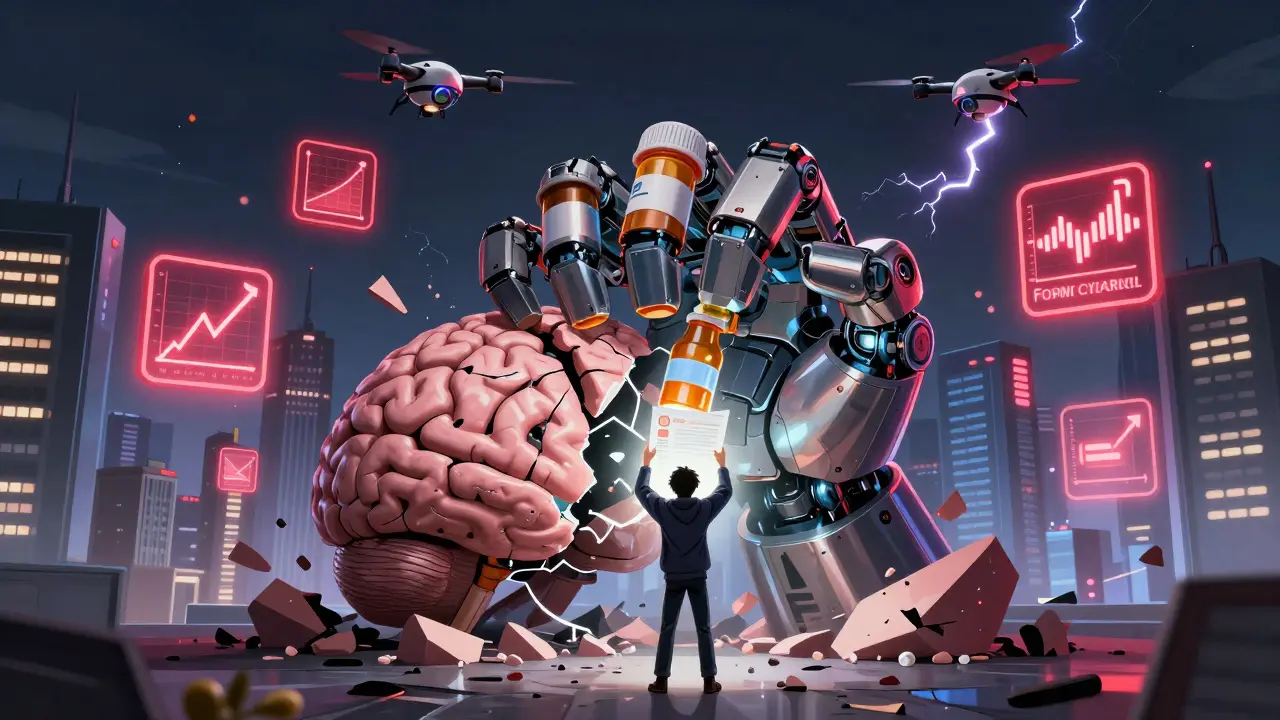
It’s not common, but it’s real: some people start having suicidal thoughts after beginning a new medication. Not because they’re failing at treatment, not because they’re weak, but because the drug itself is triggering something dangerous. This isn’t about depression getting worse-it’s about something else kicking in: restlessness so intense you can’t sit still, thoughts that feel like they’re not yours, and an urge to act before you’ve even thought it through. These aren’t signs of relapse. They’re red flags from the medication.
When the Medicine Turns Against You
Most people expect antidepressants to take weeks to work. That’s true for mood improvement. But for some, especially under 24, the first few days or weeks can bring something far more urgent: a spike in suicidal thinking. The U.S. Food and Drug Administration confirmed this in 2007 after reviewing data from 24 clinical trials involving over 4,400 young patients. The result? A mandatory black box warning on all antidepressants. The risk isn’t huge-1 to 4% of patients under 24-but when it happens, it happens fast.Stanford researchers found that 78% of these events occur within the first 28 days of starting a new drug or changing the dose. And it’s not just antidepressants. Antibiotics like doxycycline, painkillers like piroxicam, even asthma meds like formoterol have shown up in reports. The mechanism isn’t always clear, but some drugs interfere with how the liver breaks down other chemicals in the brain, leading to sudden shifts in mood or impulse control.
The Three Warning Signs You Can’t Ignore
There are three specific red flags that show up again and again in cases where medication triggered suicidal thoughts. If you or someone you know starts showing any of these, don’t wait. Call your doctor today.- Restlessness you can’t shake-This isn’t just being fidgety. It’s a deep, burning need to move. You pace. You can’t sit. You feel like your skin is crawling. This is called akathisia, and it’s the most common warning sign, showing up in over half of reported cases. Studies show people with akathisia are far more likely to attempt suicide-not because they want to die, but because the inner torment feels unbearable.
- Thoughts that feel alien-You wake up and suddenly you’re thinking, “I should end it.” But you don’t believe it. You don’t want it. It feels like someone else is whispering in your head. These are called ego-dystonic thoughts. They’re not your usual depressive thinking. They’re intrusive, shocking, and out of character. That’s a key clue: if the thought feels foreign, it might not be your depression-it might be the drug.
- Sudden impulsiveness-You’ve never acted on impulse before. Now you’re texting an ex at 3 a.m., quitting your job on a whim, or driving too fast. When this happens alongside depression or anxiety, the risk skyrockets. Your brain is stuck in fight-or-flight mode, and your ability to pause and think is gone.
These three signs together are called the “activation syndrome.” The FDA lists it as anxiety, irritability, panic, insomnia, hostility, and mania-but the core danger is the same: your mind is overstimulated, and your control is slipping.
Who’s Most at Risk?
Age is the biggest factor. People between 18 and 24 are 2.3 times more likely to experience this than those over 25. Why? Their brains are still developing. The prefrontal cortex-the part that stops you from acting on impulses-isn’t fully wired yet. Add a drug that changes serotonin and norepinephrine levels, and the system can short-circuit.Other risk factors include:
- A past suicide attempt (47% higher risk)
- A family history of suicide (32% higher risk)
- Having anxiety alongside depression (58% higher risk)
- Starting with a high dose or increasing it too fast (63% higher risk)
Here’s something counterintuitive: if your depression doesn’t improve right away, you’re actually less likely to have this reaction. That’s because the dangerous phase isn’t the depression itself-it’s the activation. The body reacts to the drug before the brain adjusts. So if you’re still feeling low but not restless or impulsive, that’s a better sign than if you’re suddenly wired and desperate.
What to Do If You See These Signs
Don’t stop the medication on your own. Don’t wait a few days to see if it gets better. Call your prescriber immediately. Many people think stopping the drug means giving up on treatment. But in 87% of documented cases, symptoms disappeared after the drug was discontinued, according to a 2024 study in JMIR Public Health and Surveillance.Your doctor may:
- Switch you to a different medication
- Lower the dose and increase it more slowly
- Add a short-term medication to calm agitation
- Refer you to a specialist
There are tools to help catch this early. The Columbia-Suicide Severity Rating Scale (C-SSRS) is used in clinics worldwide and catches 89% of emerging cases when asked weekly. If your doctor isn’t using it, ask why. You deserve to be screened.
Also, create a safety plan now-before you need it. Write down:
- Your three warning signs (restlessness? alien thoughts? impulsivity?)
- One person you can call at any time
- Three things that help you feel grounded (walking, music, a pet, breathing exercises)
- The number for the suicide and crisis lifeline: 988 (U.S.) or 13 11 14 (Australia)
Studies show people with a written safety plan are 41% less likely to end up in the hospital.
It’s Not Just Antidepressants
Most people think this only happens with SSRIs like fluoxetine or SNRIs like duloxetine. But it doesn’t. A 2024 study flagged nine non-psychiatric drugs with clear links to suicidal thoughts. Doxycycline, an antibiotic, had the highest causality score. How? It may interfere with retinoid metabolism in the brain, which affects mood regulation. Other culprits include the arthritis drug piroxicam and the cancer drug paclitaxel. The warning labels on these drugs don’t always mention this risk. That’s a gap. An estimated 12 million Americans take these drugs each year without knowing the potential mental health side effects.
What’s Changing Now?
The system is getting better. The FDA now requires all new antidepressants to test for activation syndrome in clinical trials. A 2023 NIH study found that genetic testing for CYP2D6 and CYP2C19 enzymes can predict 68% of cases-meaning doctors could soon know who’s at risk before even prescribing.Smartphone apps are also being tested. By tracking your sleep, typing speed, voice tone, and social interactions, AI models can spot early changes with 79% accuracy. If your phone notices you’re texting less, sleeping more erratically, or speaking faster, it could alert your doctor before you even realize something’s wrong.
But here’s the hard truth: only 10% of these cases get reported to safety databases. Most people don’t tell their doctor. Or their doctor doesn’t ask. That’s why your awareness matters. If you feel something’s off, say it. Even if you think it’s “just stress.”
You’re Not Alone, and It’s Not Your Fault
If you’ve experienced suicidal thoughts after starting a new medication, know this: it’s not a sign of weakness. It’s not a failure of treatment. It’s a biological reaction. You didn’t choose this. You didn’t cause it. And you’re not broken.Thousands of people have been through this. Many recovered fully after switching medications. Some found relief with a lower dose. Others needed a break from medication entirely-and found other ways to manage their mental health.
What matters now is not guilt or shame. It’s action. Talk to someone. Get help. The fact that you’re reading this means you’re already looking for answers. That’s courage.
Can antidepressants really cause suicidal thoughts?
Yes. While antidepressants help most people, they can trigger suicidal thoughts in a small percentage-especially those under 24. This isn’t because the drug is making them more depressed. It’s because the medication can cause agitation, restlessness, and impulsivity, which together create a dangerous mix. The FDA confirmed this link in 2007 and requires all antidepressants to carry a black box warning.
How quickly do these side effects start?
Most cases begin within the first 1 to 28 days after starting the drug or changing the dose. The highest risk is in the first two weeks. If you feel sudden restlessness, strange thoughts, or increased impulsivity during this time, contact your doctor immediately. Don’t wait to see if it gets better.
Is this only a problem with antidepressants?
No. While antidepressants are the most common, other drugs have been linked too. Antibiotics like doxycycline, painkillers like piroxicam, and even asthma medications like formoterol have shown associations with suicidal thoughts in studies. The exact reason isn’t always clear, but it may involve how the drug affects brain chemistry or liver enzymes. Always check for mental health side effects, even if the drug isn’t meant for depression.
What should I do if I notice warning signs?
Don’t stop the medication alone. Call your doctor right away. Symptoms like intense restlessness, alien thoughts, or sudden impulsivity need urgent attention. In 87% of cases, stopping the drug led to symptom resolution. Your doctor may adjust the dose, switch medications, or add a short-term treatment to calm agitation. Never ignore these signs.
Are there tools to catch this early?
Yes. The Columbia-Suicide Severity Rating Scale (C-SSRS) is used in clinics and detects 89% of emerging cases when asked weekly. Smartphone apps that track sleep, voice tone, and social activity can also spot early changes with up to 79% accuracy. Ask your doctor if they use these tools. If not, request them. Early detection saves lives.
Can genetic testing help predict this risk?
Yes. A 2023 NIH study found that genetic variations in the CYP2D6 and CYP2C19 enzymes-which control how your body breaks down medications-can predict 68% of cases. This means doctors may soon be able to test your genes before prescribing certain drugs to see if you’re at higher risk. It’s not routine yet, but it’s coming fast.
How common is this side effect?
It’s rare-about 1 to 4% of patients under 24 taking antidepressants. But because so many people take these drugs, even a small percentage means thousands of cases each year. The risk is higher in young adults, those with anxiety, or those with a history of suicide attempts. While rare, it’s serious enough that every patient should be warned and monitored.
paul walker
January 30, 2026 AT 08:37Man I never knew antibiotics could do this. I was on doxycycline last year for acne and felt like I was losing my mind for a week-super restless, kept texting my ex at 2am, thought I was gonna jump out the window. Didn’t connect it to the meds till I read this. Thanks for putting this out there.
Alex Flores Gomez
January 31, 2026 AT 06:00Oh please. Another ‘pharma is evil’ clickbait piece. The FDA warning exists because lawsuits happened, not because science says it’s rampant. 1-4%? That’s less than getting hit by lightning. If you’re 22 and on SSRIs and suddenly think about suicide, maybe your life choices are the problem-not the drug. Also, ‘alien thoughts’? Sounds like someone watched Inception too many times.
Frank Declemij
January 31, 2026 AT 21:35There's a critical distinction here between pharmacological side effects and psychological deterioration. The activation syndrome is not depression worsening-it's a neurochemical mismatch. Akathisia is underdiagnosed because clinicians mistake it for anxiety. The 78% statistic within 28 days is robust. This isn't anecdotal. It's replicated across multiple trials. If your doctor dismisses restlessness as ‘just adjustment,’ they're not doing their job.
DHARMAN CHELLANI
February 1, 2026 AT 21:21Lmao. So now even antibiotics are evil? Next they’ll say coffee causes suicide. People are weak. Take responsibility. Also, why are you giving out 988 numbers like it’s a coupon? This is just fearmongering dressed as awareness.
kabir das
February 2, 2026 AT 12:06Oh my god… I’ve been through this. I started sertraline and felt like my brain was being rewired by a drunk technician. I couldn’t sleep. I’d stare at the ceiling and think, ‘I should just end it’-but I didn’t want to. It felt like someone else was thinking it. I called my doctor at 3am. They said ‘it’s normal.’ I didn’t trust them after that. I stopped cold turkey. That was the worst mistake I ever made. Please… if you feel this… don’t be like me. Call someone. ANYONE. I’m still healing. I’m alive. But I almost wasn’t.
Megan Brooks
February 2, 2026 AT 17:43This is one of the most important public health pieces I’ve read this year. The normalization of mental health side effects as ‘just part of treatment’ is dangerous. We need mandatory screening tools like the C-SSRS in primary care. We need better labeling on non-psychiatric drugs. And we need to stop blaming patients for not ‘trying harder.’ This isn’t weakness. It’s physiology. Thank you for writing this with such clarity and compassion.
Ryan Pagan
February 3, 2026 AT 11:01Let me tell you what’s wild-doxycycline. I was on it for a sinus infection. Two days in, I started screaming at my cat for no reason. Then I bought a motorcycle. On a Tuesday. In the rain. My wife called me a lunatic. I thought I was being ‘bold.’ Turns out, my liver was glitching out serotonin metabolism. I didn’t know until I read this. Now I ask every doctor: ‘What’s the mental health risk?’ No more blind trust. This is life-or-death info. Everyone needs to know this.
Paul Adler
February 3, 2026 AT 14:45I appreciate the depth of this post. It’s rare to see such nuance in mental health discourse. The distinction between ego-dystonic thoughts and depressive rumination is clinically vital. Too often, patients are told to ‘just wait it out’ when they’re experiencing a pharmacological emergency. The fact that 87% of cases resolve after discontinuation should be front and center in prescribing guidelines. This isn’t alarmism-it’s harm reduction.
Sheryl Dhlamini
February 4, 2026 AT 22:55I’m 21. Started fluoxetine last month. I thought I was just ‘anxious.’ Then I started pacing so hard I wore a hole in my rug. I didn’t sleep for 72 hours. I kept thinking, ‘Why am I even here?’ But I didn’t believe it. It felt like a robot voice in my head. I didn’t tell anyone because I thought I’d be judged. I almost didn’t make it to my appointment. Then I read this. I called my doctor. We switched meds. I’m okay now. But I wish I’d known this sooner. Please… if you feel this… don’t wait. You’re not crazy. You’re reacting.
Kristie Horst
February 6, 2026 AT 16:03How touching. Another ‘mental health warrior’ post. So now we’re supposed to believe that every fleeting negative thought is a ‘biological reaction’ and not a sign of poor coping? How convenient. Let’s just blame the pills and ignore the fact that society is crumbling around us. Also, 988? You’re handing out crisis lines like they’re free candy. Who’s paying for all this? The taxpayer? The pharmaceutical industry? Someone’s profit margin is getting cozy here.
Andy Steenberge
February 7, 2026 AT 05:57One thing this post misses: the role of polypharmacy. Most people aren’t on just one drug. They’re on an SSRI, a beta-blocker, a statin, and a sleep aid. The interactions? Not studied. The liver gets overwhelmed. The brain gets confused. We need pharmacogenomic screening before any new prescription-not just for antidepressants. This isn’t just about ‘activation syndrome.’ It’s about systemic neglect in prescribing practices. We treat meds like snacks. We need to treat them like surgery.
Laia Freeman
February 8, 2026 AT 21:45OMG I CRIED READING THIS 😭 I thought I was going crazy… I was on amoxicillin for a tooth infection and suddenly I wanted to jump off my balcony?? I thought I was having a breakdown… I told my mom and she said ‘you’re just being dramatic’… I didn’t know it was the meds!! I switched and I’m fine now!! THANK YOU!! 🙏🙏🙏
rajaneesh s rajan
February 10, 2026 AT 06:54Interesting. But let’s be real-this is just Western medicine’s way of outsourcing blame. In India, we don’t have this problem because we don’t overmedicate. People here just breathe, meditate, and eat turmeric. Maybe the real issue is overdiagnosis? Also, why are you giving out phone numbers? That’s not how it works in real life. We just… live through it.
Jasneet Minhas
February 12, 2026 AT 04:05So… if I take doxycycline and start feeling suicidal… I should just stop? 😅 What if it’s my sinus infection that’s making me feel like crap? 😂 Also, why is everyone so scared of pills? I take 5 a day and I’m still alive. 🤷♂️ #TrustTheProcess #NoPillsNoProblem
Eli In
February 12, 2026 AT 20:39I’m from Nigeria and we don’t have access to these meds or screening tools. But I’ve seen people on antidepressants here-quiet, withdrawn, then suddenly… gone. No one talks about it. No one asks. This post is a gift. Please translate this. Share it. We need this everywhere-not just in the US.