

Buying medications through international mail-order used to be simple. For years, people in the U.S. could order prescriptions or over-the-counter drugs from Canada, India, or the UK for a fraction of the cost, and they’d arrive with no extra fees. That changed on August 29, 2025. The de minimis threshold - the $800 value limit that let small packages slip through customs duty-free - was eliminated. Now, almost every international shipment of medicine is subject to customs duties, paperwork, and strict rules. If you’re still considering ordering medications this way, you need to know exactly how it works today - and what the real risks are.
Why the Rules Changed (And What It Means for You)
The old system allowed 97% of international mail-order packages to enter the U.S. without paying any taxes or duties. That included everything from $20 insulin pens to $150 blood pressure pills. But starting August 29, 2025, that changed. Now, only purely personal gifts under $100 are exempt. If you’re ordering medicine - even if it’s for personal use - it’s treated as a commercial shipment. That means you’re now on the hook for customs fees, and the carrier may refuse to deliver it unless those fees are paid upfront. The government’s goal was to close a loophole that let foreign sellers undercut U.S. drug prices without paying taxes. But the impact landed hardest on regular people trying to save money on prescriptions. A $50 pack of metformin from India now might cost you another $80 in duties under the new flat-rate system. That’s not saving money - that’s paying double.Two Ways Duties Are Calculated (And Which One You’ll Likely Face)
Right now, there’s a temporary window until February 28, 2026, where carriers can choose how to collect duties. After that, only one method remains. Here’s what you need to know:- Method 1 (Ad Valorem): The duty is a percentage of the item’s declared value. For most medications, this rate is between 1% and 5%, depending on the HS code. This is the method used by FedEx and DHL Express.
- Method 2 (Flat Rate): A fixed fee based on the country of origin: $80 for countries with low tariff rates (like Canada or the UK), $160 for medium (like India), and $200 for high (like some Southeast Asian nations). This is what most postal services use.
What You Need to Send or Receive Medications Legally
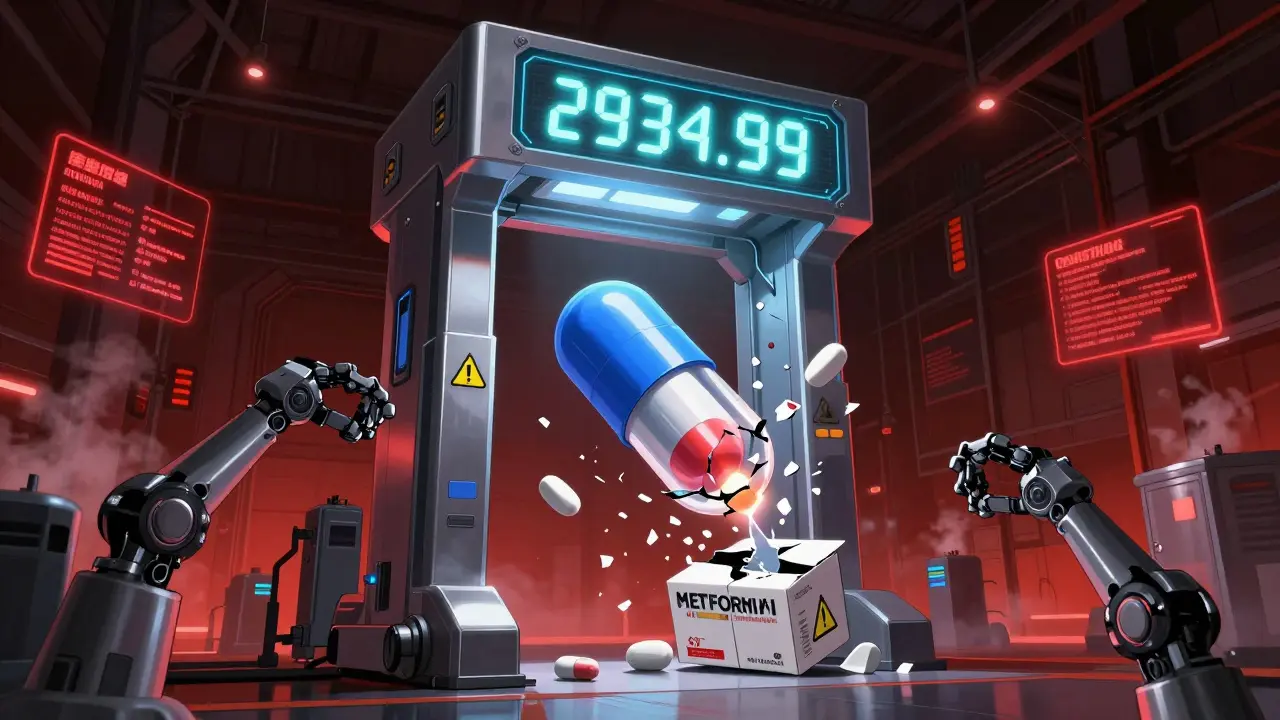
It’s not just about paying fees. There are legal requirements you can’t ignore.- HS Code Required: Every medication must be labeled with a six-digit Harmonized System code. For example, insulin is 3001.10. Generic metformin is 2934.99. If the code is wrong, customs may seize the package or charge you the highest possible rate.
- Commercial Invoice: You can’t just write “gift” or “sample.” The invoice must list the exact drug name, dosage, quantity, manufacturer, and price. No vague terms allowed.
- Prescription (Sometimes): If you’re ordering a controlled substance - like opioids, stimulants, or certain anxiety meds - you may need a valid U.S. prescription. Customs can and will stop shipments without one.
- Carrier Restrictions: Deutsche Post, Canada Post, and many other national postal services stopped accepting business parcels to the U.S. after August 22, 2025. That means if you’re trying to order from a small overseas pharmacy, they can’t ship via regular mail anymore. Your only option is DHL, FedEx, or UPS - and those cost more.
Where It’s Still Possible - And Where It’s Not
Some countries still have reliable systems for shipping medications to the U.S. - if you follow the rules.- Canada: Still one of the safest options. Many Canadian pharmacies are licensed and regulated. But they now must use express carriers like FedEx, and you’ll pay $80 in flat duties for most prescriptions.
- United Kingdom: Similar to Canada. High compliance, but shipping is expensive and duties apply.
- India: Many Indian pharmacies offer low prices, but they often don’t know how to handle the new rules. Their shipments are frequently held or returned. If you order from India, expect delays and extra fees.
- Mexico and Caribbean Islands: These are becoming popular alternatives. Some U.S. border towns have pharmacies that ship directly. But be cautious - many are unlicensed. Always check if the pharmacy is verified by the National Association of Boards of Pharmacy (NABP).
How to Spot a Legit Pharmacy (And Avoid Scams)
Not every website selling cheap meds is safe. Here’s how to tell the difference:- Check for VIPPS: Look for the Verified Internet Pharmacy Practice Sites (VIPPS) seal. It’s issued by the NABP. Only pharmacies with this seal are approved to ship to the U.S.
- Require a Prescription: Legit pharmacies won’t sell you controlled substances without a valid prescription from a U.S. doctor.
- Look for a Physical Address: If the website only has a PO box or no address at all, walk away.
- Call Them: A real pharmacy will have a working phone number with a live person who can answer questions about the medication.
- Search for Reviews: Look for independent reviews on Trustpilot or the Better Business Bureau. Don’t just trust testimonials on the site.

What Happens If You Get Caught?
Most people who receive a single package with a small quantity of medication won’t face criminal charges. But here’s what can happen:- Your package is seized and destroyed.
- You’re billed for storage and disposal fees (often $50-$150).
- If you repeatedly order controlled substances without a prescription, customs may flag your name.
- In rare cases, if you’re importing large quantities (over 100 pills) or controlled drugs, you could face federal investigation.
Alternatives to International Mail-Order
If the cost and hassle of international shipping aren’t worth it anymore, here are better options:- Use U.S. Prescription Discount Cards: Programs like GoodRx, SingleCare, or RxSaver can cut the price of brand-name drugs by 50-80%. They work at most U.S. pharmacies.
- Ask for Generic Versions: Many brand-name drugs have generics that cost 90% less. Your doctor can prescribe them.
- Check Patient Assistance Programs: Pharmaceutical companies like Pfizer, Merck, and Novo Nordisk offer free or low-cost meds to qualifying patients.
- Consider Canadian Pharmacies with U.S. Warehouses: Some companies now store medications in U.S.-based warehouses. You order online, but the drug ships from inside the U.S. - no customs, no duties.
Final Advice: Is It Still Worth It?
For most people, the answer is no. The cost savings are gone. The risk of scams is high. The paperwork is confusing. And the chance of your medication being lost, seized, or counterfeit is real. If you’re still considering it - only do so if:- You’re ordering non-controlled, non-prescription meds (like allergy pills or vitamins).
- You’re using a verified pharmacy with a VIPPS seal.
- You’re prepared to pay $80-$200 in duties on top of the drug cost.
- You’re willing to wait 3-6 weeks for delivery.
Can I still order insulin from Canada legally?
Yes, but only through licensed Canadian pharmacies that use express carriers like FedEx or DHL Express. You’ll need to pay a $80 flat duty under the new system. The pharmacy must provide a valid commercial invoice with the exact drug name, dosage, and manufacturer. You may also need a U.S. prescription if requested by customs. Avoid using standard postal services - they no longer accept commercial shipments to the U.S.
What happens if I don’t pay the customs duty on my medication?
If you don’t pay the duty within 30 days, your package will be returned to the sender or destroyed. You’ll still be charged a handling fee, typically between $50 and $150. Customs will not release the medication until payment is made. Repeated failures to pay may result in your name being flagged in customs systems, making future shipments more difficult.
Are there any medications that are always banned from international mail?
Yes. Controlled substances like opioids (oxycodone, fentanyl), benzodiazepines (Xanax, Valium), stimulants (Adderall, Ritalin), and anabolic steroids are strictly prohibited from entering the U.S. via international mail unless accompanied by a valid U.S. prescription and approved by the DEA. Even then, most carriers refuse to ship them. The FDA also bans any medication not approved for use in the U.S., regardless of its legal status abroad.
How do I find the correct HS code for my medication?
Use the U.S. International Trade Commission’s free online tariff database. Search by the drug’s generic name. For example, “metformin” returns HS code 2934.99. If you’re unsure, ask the pharmacy - they’re legally required to provide the correct code. Using the wrong code can trigger higher duties or seizure. Never use a generic code like “pharmaceuticals” - it’s not acceptable under the new rules.
Can I use a U.S. address to receive medications from overseas?
Yes, but it doesn’t change the rules. Whether the package is shipped to your home, a mailbox, or a forwarding service, U.S. customs still treats it as an import. The address doesn’t affect duty requirements or legality. If the medication is illegal or misdeclared, it will be seized regardless of the delivery location.
Diana Alime
December 24, 2025 AT 06:13so like... i just ordered my insulin from Canada last week and now i'm stuck paying $80 in 'duties'?? like wtf. i thought this was supposed to be a 'personal use' thing?? now i'm paying more than i would at CVS. this is a scam. i'm just trying to not go bankrupt.
Adarsh Dubey
December 25, 2025 AT 18:14As someone from India who runs a small pharmacy, this change is devastating. We've been shipping generic metformin to Americans for years at $15 a month. Now, with $160 flat duty, it's not viable. Many of our customers don't understand why their packages get seized. It's not about profit-it's about survival for people who can't afford insulin here. The system is broken, not us.
Bartholomew Henry Allen
December 26, 2025 AT 05:51This article is a weak apology for lawbreaking. If you're importing drugs without FDA approval you're breaking the law. Full stop. No excuses. The de minimis loophole was a national security risk. People were getting fentanyl laced with rat poison shipped in envelopes. We don't need to make it easier for foreign criminals to poison Americans. Pay the duty or don't buy. Simple.
Jeffrey Frye
December 26, 2025 AT 21:08so like... the whole 'flat rate' thing is just a way for fedex and ups to make more money right? like they're the only ones who can ship now so they jack up the prices and then customs takes their cut. and the pharmacies? they just keep sending stuff with wrong hs codes hoping you'll pay. it's all just a tax on desperation. and don't even get me started on how they're using 'counterfeit drugs' as an excuse to shut down competition. the real scam is the american pharma cartel.
Andrea Di Candia
December 27, 2025 AT 04:01I get that this sucks for people who need meds, but let's be real-most of the sites selling cheap insulin online are sketchy as hell. I used to work in pharmacy compliance. We saw patients die from fake metformin that had no active ingredient. The government isn't being cruel here-it's trying to stop people from dying. I know it hurts to pay more, but your life is worth more than $50. Use GoodRx. Talk to your doctor. There are legal, safe options. You don't need to gamble with your health.
bharath vinay
December 28, 2025 AT 08:21This whole thing is a psyop. The FDA doesn't care about safety-they care about control. The real reason they killed the de minimis rule is because they want you dependent on Big Pharma's price gouging. The 'counterfeit drugs' statistic? Fabricated. The 'HS codes'? A bureaucratic trap. They want you to pay $400 for insulin because they can. Don't be fooled. There are still ways. Find the underground channels. They're not gone-they're just quieter now.
Dan Gaytan
December 28, 2025 AT 14:24Thank you for writing this so clearly. I've been terrified to order my blood pressure med from India since the rule change. Your breakdown of the flat rate vs ad valorem was a game-changer. I just used GoodRx and got my generic for $12 at Walgreens. I'm so relieved. Also, if anyone needs help filling out the commercial invoice, I made a template-I'll DM it to you. We're all in this together ❤️
Usha Sundar
December 30, 2025 AT 02:49Canada Post stopped shipping meds to the US. That's it. No more. Move on.