

Why Light Matters More Than You Think
Most people store their medications in the bathroom cabinet, near the window, or on a bedside table-places that seem convenient but are actually dangerous for certain drugs. Light isn’t just a nuisance; it can turn life-saving medicine into something useless-or worse, harmful. Eye drops, antibiotics, hormone treatments, and even some vitamins can lose half their strength in as little as 30 days if exposed to sunlight or bright indoor lighting. The FDA recorded over 1,800 adverse events in 2022 linked to improper storage, and nearly a third of those involved light exposure. If your eye drops look cloudy, your cream turned yellow, or your insulin doesn’t seem to be working like it used to, light might be the culprit.
What Makes a Medication Light-Sensitive?
Not all meds need special care, but many do. Look for labels that say "Protect from Light," "Store in Original Container," or "Keep in Dark Place." These aren’t just suggestions-they’re science-backed requirements. Drugs like tetracycline, nitroglycerin, tretinoin cream, certain chemotherapy agents, and eye drops such as latanoprost and travoprost are especially vulnerable. Their chemical structure breaks down when hit by UV or even blue light wavelengths below 470 nanometers. A 2022 study in the Journal of Ocular Pharmacology and Therapeutics showed that eye drops stored in clear bottles lost 35% of their potency in just 14 days. That’s not a small drop-it’s the difference between controlling your glaucoma and losing vision.
Amber Bottles Are the Gold Standard
Pharmacies don’t use brown or amber bottles by accident. These containers block 98% of harmful light, thanks to special glass tinting that filters out UV and blue wavelengths. Amber glass is the most reliable option, especially for long-term storage. Opaque plastic works too, but it’s less effective-blocking only about 85% of light. For eye drops, multi-dose containers with both amber glass and an outer opaque sleeve (like those from Bausch + Lomb) last 25% longer than plain amber bottles. The downside? You can’t see how much is left. That’s why some people transfer meds to clear bottles-big mistake. Even if you think you’re being careful, light gets in through gaps, reflections, and daily handling.
Temperature Matters Just as Much
Light isn’t the only enemy. Heat and humidity wreck meds too. Most oral medications should stay between 59°F and 77°F (15°C-25°C). Eye drops are a little more flexible-40°F to 77°F (4°C-25°C) after opening. But here’s the catch: if your medication also needs refrigeration (like insulin or some biologics), it still needs to be protected from light. A fridge is great, but only if the bottle stays in its original amber container. Don’t put it in a clear plastic box inside the fridge. That defeats the purpose. For travel, use an insulated bag with UV-blocking lining. These cost around $25-$40 and keep meds stable for 8-12 hours, even in a hot car.
Where NOT to Store Your Medications
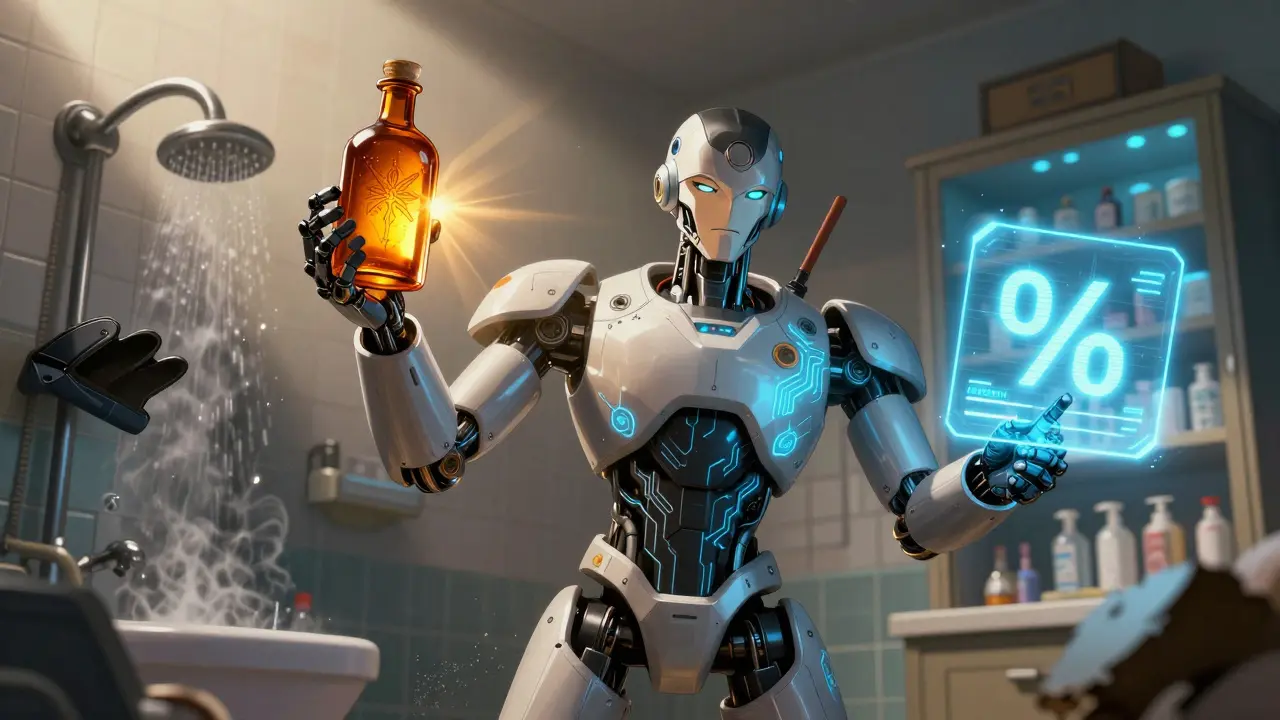
- Bathrooms: High heat and steam from showers degrade meds fast. A 2022 survey found 68% of people store meds here-despite 42% reporting discoloration or texture changes.
- Windowsills or near lamps: Even indirect sunlight through a window can damage light-sensitive drugs over time.
- Car glove compartments: Summer temps can hit 140°F. That’s not storage-that’s a chemical experiment.
- Medicine cabinets with lights: Many modern cabinets have LED lights that turn on when opened. Those LEDs emit blue light-enough to degrade sensitive compounds.
Signs Your Medication Has Gone Bad
You don’t need a lab test to tell if your meds are compromised. Watch for these red flags:
- Color changes: White cream turning yellow (like tretinoin), clear liquid turning cloudy or brown.
- Unusual smells: Aspirin that smells like vinegar? It’s broken down into acetic acid.
- Texture changes: Tablets that crumble, capsules that stick together, or ointments that separate.
- Reduced effectiveness: Your eye pressure isn’t dropping, your rash isn’t improving, or your insulin isn’t lowering blood sugar like before.
If you see any of these, stop using it. Don’t guess. Call your pharmacist or the FDA’s Medication Storage Hotline at 1-855-543-3784. They can tell you if it’s safe or if you need a replacement.
Traveling with Light-Sensitive Meds
When you’re on the road, your meds are exposed to more light and heat than ever. Here’s how to stay safe:
- Keep medications in their original amber containers.
- Use a UV-blocking insulated bag-never just a purse or backpack.
- If flying, carry them in your hand luggage. Checked baggage can freeze or overheat.
- For insulin, use a cooling wallet with a gel pack. Don’t let it freeze.
- Never leave meds in a car, even for 10 minutes.
There are new smart containers in testing that alert your phone if light exposure goes over safe limits. They’re not widely available yet, but keep an eye out-they’re coming.

What to Do With Expired or Damaged Meds
Never flush eye drops or creams down the toilet. That contaminates water supplies. Don’t throw them in the trash either-someone might find them. Use a drug take-back program. Most pharmacies, hospitals, and police stations have drop boxes. If none are nearby, mix the meds with coffee grounds or cat litter in a sealed bag before tossing. This makes them unappealing and unrecognizable. For eye drops, remove the dropper tip and throw it separately. The plastic can’t be recycled, but at least you’re preventing accidental ingestion.
Simple Storage Checklist
- ✔️ Keep all light-sensitive meds in original amber or opaque containers.
- ✔️ Store in a cool, dry place-kitchen cabinet away from stove or sink is ideal.
- ✔️ Avoid bathrooms, windows, and cars.
- ✔️ Refrigerate only if the label says so-and still keep in original packaging.
- ✔️ Check expiration dates and look for color/texture changes every month.
- ✔️ Use UV-blocking travel bags when away from home.
- ✔️ Dispose of damaged or expired meds properly through take-back programs.
Why This Isn’t Just Common Sense
It’s easy to think, "It’s just a few hours in the sun-it won’t hurt." But degradation isn’t linear. It’s cumulative. A few minutes here, a few hours there-over weeks, it adds up. The American Society of Health-System Pharmacists found that 37% of all medication efficacy complaints tied to storage were due to light exposure. That’s not rare. That’s routine. And it’s preventable. You wouldn’t leave your phone in the sun all day and expect it to work fine. Your medicine deserves the same care.
Final Thought: Your Eyes Are Worth Protecting
If you’re using eye drops for glaucoma, dry eye, or infection, you’re protecting your vision. That’s priceless. But if you’re storing them in a clear bottle on the counter, you’re undoing the work of your doctor and the pharmaceutical company. Stick with the amber bottle. Keep it cool. Don’t transfer it. Don’t guess. When in doubt, call your pharmacist. It’s a two-minute call that could save your sight.
Can I transfer my eye drops to a different container?
No. Transferring eye drops to a clear or non-protective container removes the light-blocking protection. Even if the new bottle looks clean, it won’t block UV or blue light. The American Academy of Ophthalmology says this practice causes 18% of eye drop efficacy issues. Always keep them in the original amber bottle.
Do I need to refrigerate all eye drops?
Not all. Only if the label says "Refrigerate" or "Keep in the fridge." Most eye drops are fine at room temperature (40°F-77°F) after opening. But once opened, they expire faster-usually within 4 to 6 weeks. Check the label or ask your pharmacist. Refrigeration can extend shelf life for some, but it’s not required unless specified.
What if my medication came in a clear bottle?
If it’s labeled "Protect from Light," the pharmacy should have given you an amber container or an opaque sleeve. If not, call your pharmacy and ask for a light-protective container. You’re entitled to it. Some pharmacies stock amber bottles for this exact purpose. Don’t accept a clear bottle for light-sensitive meds-it’s a safety risk.
Can I use aluminum foil to wrap my meds?
Yes, but it’s not practical for daily use. Aluminum foil blocks 100% of light, but you have to unwrap and rewrap every time you take your medicine. This leads to a 32% non-compliance rate, according to a 2021 study. It’s better for travel or short-term backup than everyday use. Stick with amber containers unless you’re traveling and have no other option.
How do I know if my medication is still good?
Check the expiration date, then look for changes: color, smell, texture. If your cream turned yellow, your liquid became cloudy, or your pills smell strange, throw them out. When in doubt, call your pharmacist. They can tell you if it’s safe based on the drug type and storage history. Never risk using degraded medication-it could be ineffective or harmful.
Adam Rivera
January 13, 2026 AT 23:21Man, I just realized I’ve been storing my glaucoma drops on the bathroom counter next to the hair dryer. No wonder they’ve been acting up. Thanks for the wake-up call - going to grab an amber bottle today.
Rosalee Vanness
January 14, 2026 AT 22:05I used to think this was overkill - until my aunt lost partial vision because she switched her eye drops to a clear vial for "convenience." The pharmacy didn’t even warn her. This isn’t just about science - it’s about dignity, autonomy, and not letting corporate laziness cost you your sight. Amber bottles aren’t a luxury; they’re a right. And if your pharmacist gives you side-eye when you ask for one? Find a new one.
lucy cooke
January 16, 2026 AT 17:31Oh, the tragic irony of modern pharmacology: we’ve engineered molecules so delicate they weep under LED light, yet we expect people to remember this like it’s a sacred mantra. We live in a world where your phone has 12 cameras but your medicine is stored like a forgotten relic in a sunlit cabinet. It’s not ignorance - it’s systemic neglect dressed up as convenience. The real tragedy? We’ve normalized this. We’ve made vulnerability a virtue. And yet, here we are - staring at cloudy drops, wondering why the world won’t just… care.
Trevor Davis
January 17, 2026 AT 03:22Okay real talk - I’m the guy who leaves his insulin in the glovebox because "it’s only 10 minutes." I’m also the guy who just read this and felt 100% seen. Not gonna lie - I’m scared. But also… kinda grateful? This post didn’t just inform me - it made me feel like my health wasn’t an afterthought. Thanks for writing this. I’m buying a UV bag tonight.
John Tran
January 18, 2026 AT 12:42soo… i just found out my tretinoin has been sitting on my nightstand for 8 months in a clear bottle?? like… it’s been yellowing for like 3 months but i thought it was just old? and now i’m reading that it’s basically chemical warfare against my skin? and the worst part? my derm never told me. i mean… did they even know? or did they just assume i was smart enough to figure it out? i feel so stupid. but also… why is this not on the bottle? like… why is the burden on the patient? i’m gonna call my pharmacy first thing tomorrow. also - anyone else feel like pharma companies are just waiting for us to mess up so they can sell us more stuff?
Trevor Whipple
January 19, 2026 AT 12:55you people are ridiculous. i’ve been storing my meds in the kitchen cabinet since 2010 and i’m still alive. your "amber bottle cult" is just fearmongering. light doesn’t "ruin" meds - your anxiety does. also, why are you all so obsessed with containers? just take the damn pill. it’s not rocket science. unless you’re allergic to common sense. which, judging by this thread, you are.
Lethabo Phalafala
January 21, 2026 AT 09:10As a nurse in Johannesburg, I’ve seen people use expired eye drops because they can’t afford replacements - and then come in with infections that could’ve been avoided. This isn’t about luxury. It’s about survival. When your pharmacy gives you a clear bottle because they’re out of amber? Tell them to call the distributor. Tell them you won’t leave without the right container. Your eyes are worth more than their inventory shortage.
Nelly Oruko
January 22, 2026 AT 19:44So many of us treat meds like coffee - "I’ll just leave it out." But this isn’t caffeine. It’s precision chemistry. I used to transfer my drops to a small clear vial for travel - until I learned the UV exposure was degrading them by 20% per week. Now I keep the original bottle in a pouch inside my purse. Simple. Safe. Non-negotiable. If you’re not doing this, you’re gambling with your health. And that’s not brave - it’s careless.
vishnu priyanka
January 24, 2026 AT 18:02Back home in Kerala, we wrap our medicines in banana leaves. Old school? Maybe. But it blocks light, keeps moisture out, and smells like home. I still do it for my mom’s diabetes meds - even though she rolls her eyes. Sometimes tradition knows more than the manual. Just saying.
Diana Campos Ortiz
January 25, 2026 AT 01:25I used to think this was dramatic… until my mom’s glaucoma meds turned cloudy. She didn’t notice until her pressure spiked. We didn’t know it was the storage. She’s lucky she didn’t lose vision. Now? Everything goes in the dark cabinet. Even my vitamins. No exceptions. I’m not sorry for being obsessive. My mom’s sight is worth it.
Jesse Ibarra
January 26, 2026 AT 16:23Oh wow. So now we’re supposed to treat our meds like sacred relics? Who died and made you the Medication Police? I bet you also fold your toilet paper in triangles and whisper to your toothbrush. This isn’t a TED Talk - it’s a panic attack in paragraph form. Light exposure? So what? Your body adapts. Your meds are fine. Stop treating your medicine cabinet like a nuclear bunker.
laura Drever
January 27, 2026 AT 12:32am i the only one who thinks this is a marketing ploy by amber bottle manufacturers? like… who even uses these? also… if light degrades meds so much why do they come in clear bottles in the first place? oh right. profit. also. i dont have time for this. my meds are fine. move on.
Randall Little
January 28, 2026 AT 16:42Wait - so you’re telling me the same FDA that approved 37% of new drugs with "limited long-term safety data" is now suddenly the guardian angel of my eye drops? That’s rich. Also, 1,800 adverse events? Out of how many billions of doses? You’re turning a statistical blip into a moral crisis. Chill. Your insulin isn’t going to turn into a villain. But your anxiety? That’s the real threat.
James Castner
January 29, 2026 AT 03:36Let us not mistake caution for paranoia - nor convenience for competence. The degradation of pharmaceuticals under light exposure is not theoretical; it is quantifiable, peer-reviewed, and clinically consequential. To dismiss this as hyperbole is to misunderstand the nature of photochemical instability - a phenomenon as real as oxidation or hydrolysis. The human body does not compensate for subtherapeutic dosing. When a latanoprost molecule absorbs a 450-nanometer photon, its ester linkage cleaves. The result? A compound with no IOP-lowering activity. That is not a "maybe." That is chemistry. And if your pharmacist hands you a clear vial, you have the right - nay, the duty - to refuse it. Your vision is not negotiable. The burden of safety does not rest on the patient’s memory. It rests on the integrity of the system. And if that system fails - as it so often does - then we must become its arbiters. Not out of fear. But out of responsibility. The amber bottle is not a symbol. It is a safeguard. And we are its custodians.