
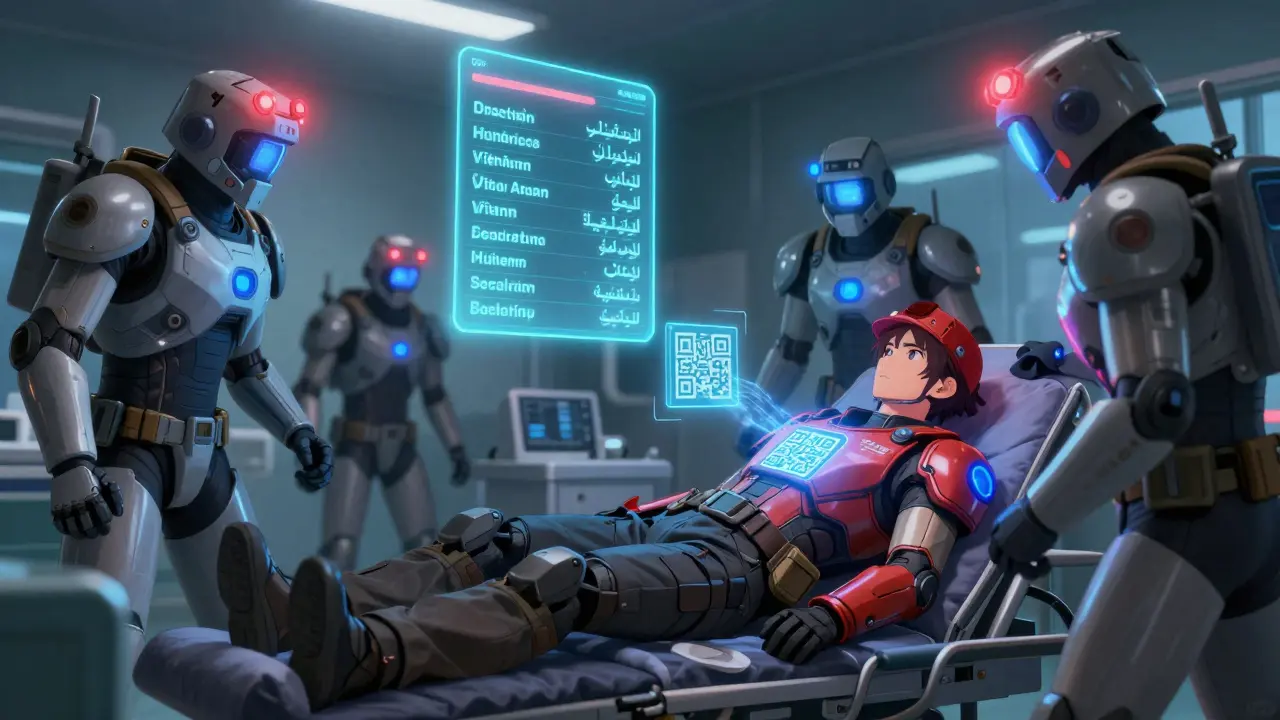
Imagine you're traveling abroad, and suddenly you feel dizzy, chest tight, or your face swells up. You can't speak the local language. The paramedics or ER staff ask you what medications you're taking. You freeze. You know the names, the doses, the reasons - but you can't say them. This isn't a rare scenario. It happens every day to travelers, immigrants, and expats. And it's deadly. Medication errors in emergencies are far more common when language gets in the way.
Here's the truth: if you're on regular meds and travel outside your home country, you need a physical or digital list of your medications - in at least two languages: your native one, and English. But even English isn't always enough. If you're from Vietnam, Arabic, or Somalia, you need your list in your first language too. Emergency rooms aren't equipped to translate on the spot. They need clear, accurate info fast. A multilingual medication list isn't optional. It's your lifeline.
What a Real Multilingual Medication List Should Include
A simple note on your phone saying "I take blood pressure pills" won't cut it. Emergency staff need specifics. A solid list has six key pieces of information for every medication:
- Medication name - both brand and generic (e.g., Lisinopril / Zestril)
- Dosage - how much you take (e.g., 10 mg)
- Frequency - how often (e.g., once daily, at bedtime)
- Purpose - why you take it (e.g., for high blood pressure)
- Prescribing doctor - name and clinic (helps if they need to verify)
- Start date - when you began taking it
That’s it. No fluff. No paragraphs. Just clear, bullet-style entries. If you take supplements, herbs, or over-the-counter meds like aspirin or melatonin - include those too. Many emergencies are triggered by interactions between prescription drugs and herbal remedies. A 2020 study in JAMA Internal Medicine found patients using detailed medication lists had 28% fewer errors when admitted to hospital. That’s because doctors don’t guess. They see exactly what you’re on.
Where to Get Pre-Made Multilingual Lists
You don’t have to build this from scratch. Several trusted organizations have already created templates in multiple languages. Here are the most reliable ones:
- NPS MedicineWise (Australia) - Offers a free printable list in 11 languages: English, Arabic, Chinese (Simplified and Traditional), Hindi, Korean, Persian, Punjabi, Spanish, Tamil, and Vietnamese. It’s designed for Australian healthcare but works anywhere. Download it from their website or use their app (available on iOS and Android). The app even sends you reminders and lets you store photos of your pill bottles.
- Tennessee Pharmacists Association (UML) - Created in 2007, this is one of the oldest standardized lists. Available in 10 languages: English, Spanish, Chinese, Vietnamese, Korean, Arabic, Russian, Somali, Nepali, and French. It’s widely used in U.S. ERs and pharmacies. You can find the PDFs on their official site.
- MedlinePlus (U.S. National Library of Medicine) - Provides health info in over 40 languages. While it doesn’t have a fillable form, it offers clear templates for medication lists in Arabic, Russian, Spanish, Vietnamese, and more. Use their language guides to build your own list.
- British Red Cross Emergency Phrasebook - Not a medication list, but it includes 150+ medical phrases in 36 languages. Useful for saying things like, "I am allergic to penicillin" or "I take this medicine every morning." Print this and carry it with your list.
Don’t rely on Google Translate. Medical terms don’t always translate accurately. "Heart pill" might become "pill for heart" - but what if the doctor needs to know it’s a beta-blocker? Precision matters.
How to Translate Your List Accurately
If your language isn’t covered by the templates above, you need to get your list professionally translated. Here’s how:
- Ask your pharmacist. Most offer free translation services for patients with limited English. They’ve done this hundreds of times.
- Use a certified medical translator. Look for someone accredited by the National Council on Interpreting in Health Care (NCIHC). Avoid friends or family - studies show untrained interpreters make errors in 40% of cases.
- Double-check for dialects. If you speak Cantonese, don’t use a Mandarin translation. If you’re from Somalia, use Somali (Af-Soomaali), not Arabic. A 2022 survey found 68% of LEP patients couldn’t find their exact dialect on available lists.
- Include traditional medicines. If you take turmeric, ashwagandha, or traditional herbal teas, write them out clearly. Many ERs don’t know these are common in certain cultures. A 2023 study found 52% of patients’ lists didn’t include herbal remedies - leading to dangerous interactions.
Digital vs. Paper: Which One to Use
Both have advantages. Use both if you can.
Digital: Apps like NPS MedicineWise let you store your list, set reminders, and even scan pill bottles. You can email or text the list to someone. But what if your phone dies? Or you’re in a country with no signal? That’s why you need a backup.
Paper: Print two copies. Laminate them. Keep one in your wallet. Put the other in your travel bag. Write your name, emergency contact, and blood type on the front. Use a waterproof sleeve. Some travelers tape it inside their passport. It’s low-tech, but it works when tech fails.
Pro tip: Add a QR code. Use a free tool like QRCode Monkey to turn your digital list into a scannable code. Print it on the paper version. ER staff with smartphones can scan it instantly - even if they don’t speak your language.
Update It Like Your Life Depends on It
Medication lists become useless if they’re outdated. A 2022 analysis of 1,200 patient cases found 78% of medication errors happened during transitions - like after a doctor changed your dose or you started a new drug. So update your list every time:
- You get a new prescription
- You stop a medication
- Your dosage changes
- You start a new supplement or herb
Make it part of your routine. After every doctor’s visit, update it. Set a calendar reminder every three months. If you forget, your list becomes a liability - not a safety net.

What to Do in an Emergency
When you’re in trouble, don’t wait to be asked. Hand your list to the first person who helps you - nurse, paramedic, ER clerk. Say: "This is my medication list. Please read it."
If they don’t understand, point to the language section. If you have the British Red Cross phrasebook, show them the page: "I take these medicines. I am allergic to penicillin." Even if they don’t speak your language, the visual cues help. Studies show that with a printed list, ER visits for LEP patients are 22 minutes shorter on average. That’s 22 minutes closer to the right treatment.
Why This Matters More Than You Think
Language barriers don’t just cause confusion. They cause death. Dr. Glenn Flores’ 2019 study found that patients with limited English proficiency had 35% more adverse drug events and 50% more medication errors in emergencies. In one case, a woman from Nepal was given a drug she was allergic to because the nurse misheard her pronunciation of "warfarin." She nearly died. Her list was in Nepali - but no one had seen it.
It’s not just about translation. It’s about cultural understanding. A 2022 study found that 43% of translated medication instructions still used phrases that didn’t make sense in the patient’s culture. For example, "take with food" might mean something different in a country where meals are eaten at different times. The best lists don’t just translate words - they adapt to how people live.
Start Today - Here’s Your Action Plan
You don’t need to wait for a crisis. Here’s what to do right now:
- Go to NPS MedicineWise or the Tennessee Pharmacists Association site and download the multilingual medication list template.
- Fill it out with your current medications - include every pill, patch, injection, and supplement.
- Get it translated into your native language if it’s not already there. Ask your pharmacist.
- Print two copies. Laminate one. Put one in your wallet. Put the other in your travel bag.
- Download the NPS MedicineWise app. Enter your meds. Turn on reminders.
- Give a copy to a trusted friend or family member. Ask them to check it with you every three months.
That’s it. No apps to buy. No complicated forms. Just a simple, clear list - in languages you and emergency staff can understand.
Traveling with meds isn’t just about packing them. It’s about making sure someone can save your life if you can’t speak.
Can I just use Google Translate to make my medication list?
No. Google Translate often gets medical terms wrong. For example, it might translate "aspirin" as "painkiller" - which could lead to dangerous overdoses. It doesn’t distinguish between brand and generic names. Always use a template from a trusted health organization like NPS MedicineWise or MedlinePlus, and get professional translation if needed.
What if my language isn’t available on any list?
Contact your pharmacist. Many offer free translation services. If not, use a certified medical interpreter from the National Council on Interpreting in Health Care (NCIHC). Avoid using friends or family - studies show they make dangerous errors in 40% of cases. Write your list clearly in your language first, then have it professionally translated into English and your native language.
Do I need to include herbal supplements and vitamins?
Yes. Herbal supplements like turmeric, ginkgo, or St. John’s Wort can interact with prescription drugs and cause serious side effects. A 2023 study found that 52% of patients didn’t include these on their lists - and emergency staff had no idea they were taking them. Include every substance you take, even if you think it’s "just natural."
How often should I update my list?
Update it every time your meds change - new prescription, stopped drug, changed dose. Set a reminder every three months to review it. Outdated lists are worse than no lists - they lead to wrong treatments. A 2022 study found 78% of medication errors happened because the list wasn’t current.
Is the NPS MedicineWise app free?
Yes. The NPS MedicineWise app is completely free on both Apple App Store and Google Play. It works offline, lets you scan pill bottles, set reminders, and export your list in 11 languages. It’s the most reliable tool for Australians and travelers worldwide.
Joe Prism
March 6, 2026 AT 19:02It’s not about being prepared-it’s about respecting how fragile the system is when language breaks down.
One wrong translation, one missed herb, one dead patient.
Simple list. Zero excuses.
Bridget Verwey
March 8, 2026 AT 01:10And you didn't even say 'just learn English' once. What is this, a miracle?
Ferdinand Aton
March 8, 2026 AT 12:31Fix the system first, then make the list.
William Minks
March 9, 2026 AT 08:57Put one in my wallet, one in my backpack, and one on my fridge.
My grandma’s in Vietnam and she’s using the Vietnamese version too.
Small effort, huge peace of mind. 🙌
Jeff Mirisola
March 10, 2026 AT 06:09When you're choking, sweating, and terrified, you shouldn't have to beg someone to understand you.
Every person deserves to be heard in a crisis, no matter where they're from.
And if you're not doing this? You're gambling with your life.
Do it. Now.
Susan Purney Mark
March 11, 2026 AT 04:57One woman came in with chest pain-she was on warfarin but didn’t say it because she thought ‘blood thinner’ was enough.
They gave her aspirin. She bled out in the hallway.
Her list was in Amharic. No one looked.
Don’t be that person.
Ian Kiplagat
March 12, 2026 AT 19:01Added mine to my passport sleeve. Done.
Amina Aminkhuslen
March 13, 2026 AT 15:45Pathetic. Just get a smartwatch with emergency meds synced to the cloud. Or are you too lazy?
amber carrillo
March 14, 2026 AT 17:40I have it in English and Mandarin.
I gave copies to my sister and my neighbor.
I will update again in three months.
It is simple.
It is necessary.