
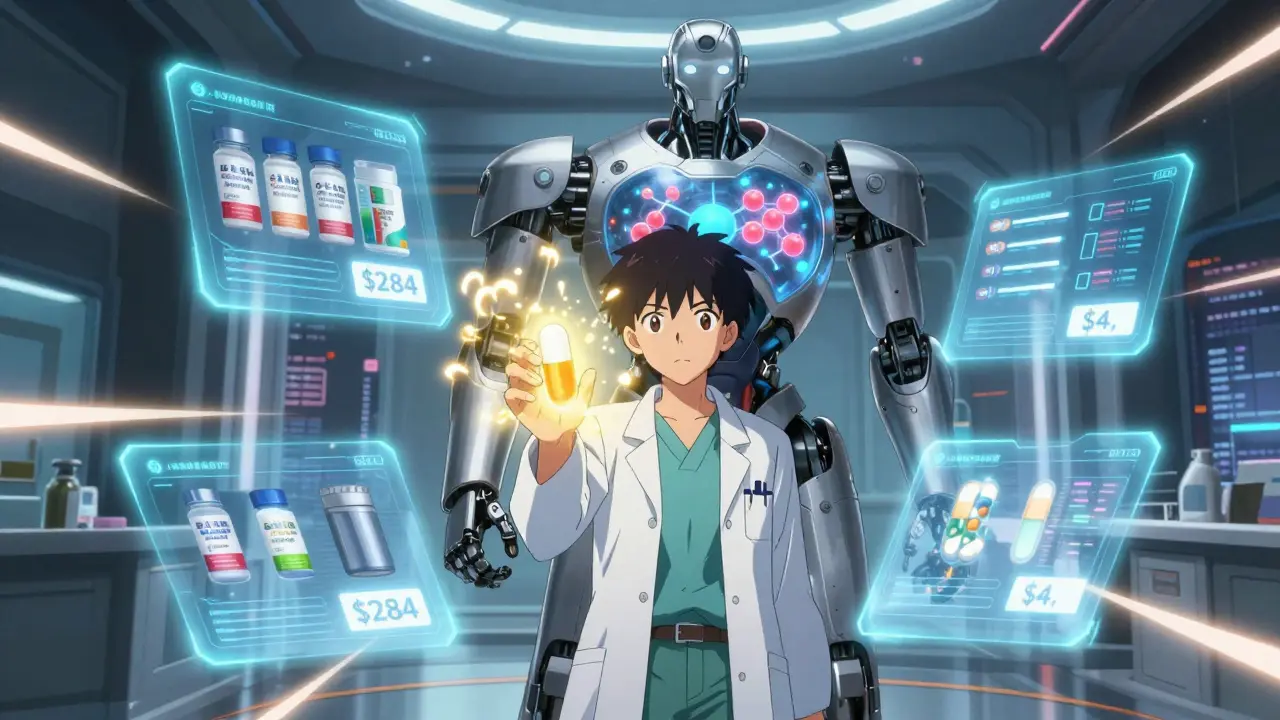
Switching to a generic version of your medication can save you hundreds-or even thousands-of dollars a year. But if you’ve ever walked out of the doctor’s office with a brand-name prescription and then seen the price at the pharmacy, you know how shocking it can be. The good news? You don’t have to accept that price without asking. Most of the time, there’s a generic alternative that works just as well-and costs a fraction of the price.
Why Generics Are Just as Effective
Generic drugs aren’t cheaper because they’re weaker. They’re cheaper because they don’t need to pay for the original research, marketing, or patent protection. The FDA requires generics to contain the exact same active ingredient, in the same strength, and delivered the same way as the brand-name drug. That means if your doctor prescribed 20 mg of lisinopril for high blood pressure, the generic version has the same 20 mg of lisinopril inside it. No tricks. No shortcuts.
Studies show that 95% of generic drugs perform identically to their brand-name counterparts in real-world use. The FDA tests them for bioequivalence-meaning they must deliver the same amount of medicine into your bloodstream at the same speed as the brand. The allowed variation? Only 80-125%. That’s tighter than many over-the-counter pain relievers are regulated.
Take warfarin, a blood thinner. Some people worry about switching generics here because small changes can matter. But even for these so-called "narrow therapeutic index" drugs, the FDA says the issue isn’t the generic itself-it’s switching between different generic manufacturers. If you’re stable on one generic, stick with it. Don’t jump between brands unless your doctor advises it.
How Much Can You Really Save?
Let’s say your doctor prescribes Nexium for acid reflux. The brand-name version might cost $284 for a 30-day supply. The generic, omeprazole? Around $4. That’s a 98% drop in price. For antidepressants like sertraline, the brand-name Zoloft can run $400 a month. The generic? Under $10. These aren’t rare cases. For 78.5% of the top 200 prescribed medications in 2022, a generic version was available-and priced on average 82% lower.
Medicare Part D patients get generics 89% of the time when available. Even private insurance plans fill generics over 70% of the time. The savings add up fast. AARP found that seniors who asked about generics saved an average of $427 per year. One patient with rheumatoid arthritis saved $1,820 a month by switching from Humira to its generic adalimumab. That’s not a hypothetical-it’s real money in people’s pockets.
When You Should Stick With Brand Name
There are exceptions. About 5% of medications fall into the "narrow therapeutic index" category. These include:
- Thyroid medications (like levothyroxine)
- Seizure drugs (like phenytoin or carbamazepine)
- Blood thinners (like warfarin)
- Some immunosuppressants (like cyclosporine)
For these, tiny changes in blood levels can cause big problems. If your doctor says you need the brand, ask why. Is it because of your specific condition? Or because they’re not aware a generic became available? Many doctors don’t track when generics hit the market. In fact, a 2022 study found most physicians can’t reliably say which generics are covered by insurance or when a new one launches.
If you’ve been stable on a brand-name drug and your doctor says you can’t switch, ask: "Is this because of the drug’s category-or because I’ve always taken the brand?" If it’s the latter, you have room to push back.
How to Bring It Up at Your Appointment
You don’t need to be confrontational. You just need to be clear. Start by saying: "I want the most effective drug at the best price, and I want prescriptions for generic drugs when possible." That shifts the conversation from "Can I get the cheap one?" to "How do we make sure I’m getting the right treatment without overpaying?"
Here are four specific questions to ask:
- "Is there a generic version of this medication?"
- "Would it be safe and appropriate for me to use the generic?"
- "Are there any reasons I should stay on the brand-name version?"
- "If there isn’t a generic now, when might one become available?"
Bring a printout or screenshot of the price difference. Blue Cross Blue Shield of Texas has examples showing Nexium at $284 vs. omeprazole at $4. Seeing it side-by-side makes it real. You’re not asking for a favor-you’re asking for a smart, evidence-based choice.
Timing Matters: Ask Before You Leave the Office
Don’t wait until you’re at the pharmacy counter. That’s when you’re stuck. If the prescription is already written for the brand, you might have to go back to the doctor, wait for a new script, and delay your treatment. Better to ask during the appointment.
If your doctor says, "I usually prescribe this brand," respond with: "I understand. But I’m trying to keep my costs down. Is there a generic that’s just as effective?" Most doctors will say yes. If they hesitate, ask if the drug has a narrow therapeutic index. If they don’t know, that’s a sign they’re not up to date-and you can ask for a second opinion or ask the pharmacist to check.
What Your Pharmacist Can Do
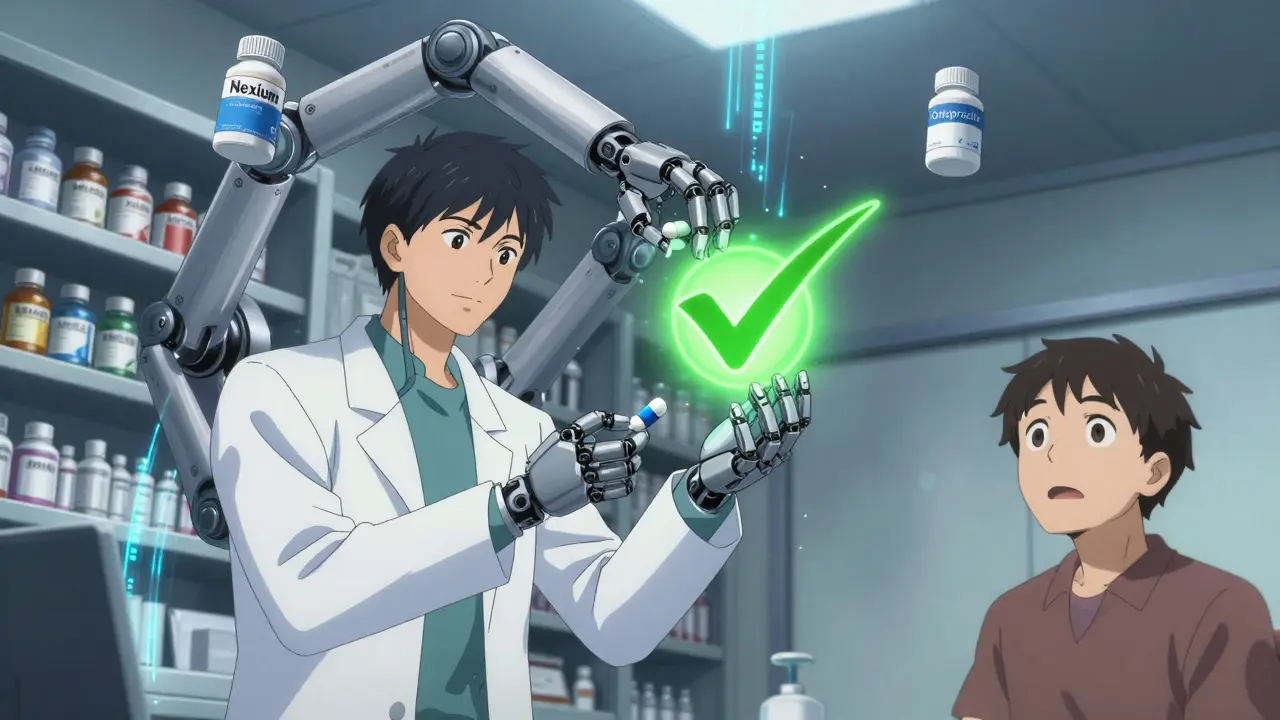
Pharmacists are your secret weapon. In 48 states, they’re allowed to substitute a generic for a brand-name drug unless the doctor writes "Do Not Substitute." That means even if your doctor didn’t mention generics, your pharmacist can step in and offer the cheaper option.
Don’t be shy about asking your pharmacist: "Is there a generic for this?" or "Can you check if a lower-cost version is available?" Many pharmacists will even call your doctor to suggest a switch if one exists and it’s appropriate. They’re trained to know what’s available, what’s covered by your insurance, and what’s safe to swap.
Insurance and Coverage: Know Your Plan
Not all plans treat generics the same. Medicare Part D has the highest generic use rate-89%. Private insurers are lower, around 72%. Some plans require you to try the generic first before covering the brand. Others have tiered pricing: generics are Tier 1 (lowest cost), brands are Tier 3 or 4.
Check your plan’s formulary (the list of covered drugs). You can usually find it online under "Drug List" or "Formulary." If your drug isn’t listed, call customer service. Ask: "Is there a generic alternative on the formulary?" If there is, your doctor can switch it easily.
What If Your Doctor Says No?
If your doctor refuses to prescribe a generic, ask for the reason in writing. Is it because of your medical history? A known sensitivity? Or just habit?
If it’s habit, you can ask for a referral to a pharmacist or a second opinion. Some clinics have medication therapy management programs where a pharmacist reviews your entire list and suggests cost-saving switches. You can also request a 30-day trial of the generic with a follow-up lab test if needed-especially for thyroid or blood thinner medications.
Remember: You have the right to ask. You have the right to know your options. And you have the right to choose what works for your health and your budget.
Real Stories, Real Savings
On Drugs.com, 78% of patients who switched from brand to generic for common drugs like lisinopril or sertraline reported no difference in effectiveness. Twelve percent noticed minor side effects-like a different pill shape or a slight stomach upset-but those usually cleared up within a week or two. The changes were due to inactive ingredients, not the medicine itself.
One woman in Ohio switched from brand-name Synthroid to a generic levothyroxine and saved $300 a month. Her doctor checked her TSH levels after six weeks-everything was perfect. Another man in Florida switched from Crestor to rosuvastatin and saved $4,500 a year. He didn’t feel any different. His cholesterol was the same.
These aren’t outliers. They’re the norm.
Final Thoughts: It’s Your Health and Your Money
Generic drugs aren’t second-rate. They’re the same medicine, sold at a fair price. The system is designed to save you money-if you know how to ask. Most doctors want you to save. They just don’t always remember the details.
Next time you get a prescription, don’t assume the brand is the only option. Ask. Bring the numbers. Be polite but firm. You’re not being difficult-you’re being smart. And if your doctor resists, it’s not because you’re wrong. It’s because they’re overwhelmed. Your question might be the one that makes them look up the latest data-and change their practice for good.
For most people, the answer is simple: yes, there’s a generic. And yes, it’s safe. And yes, you deserve to pay less for the same result.
Are generic drugs as safe as brand-name drugs?
Yes. The FDA requires generic drugs to meet the same strict standards as brand-name drugs for safety, effectiveness, strength, purity, and quality. They must contain the same active ingredient, work the same way in the body, and deliver the same clinical benefit. Millions of people use generics every day without issue.
Why do generics cost so much less?
Generics don’t have to repeat expensive clinical trials because they’re proven to work the same as the original. They also don’t spend money on advertising or marketing. Once the brand-name patent expires, multiple companies can make the same drug, driving prices down through competition. After a few years, generic prices often drop 80-95% below the brand.
Can I switch from a brand-name drug to a generic without my doctor’s approval?
In most cases, yes-your pharmacist can substitute a generic unless your doctor writes "Do Not Substitute" on the prescription. But it’s still best to talk to your doctor first, especially for medications like thyroid drugs, blood thinners, or seizure medicines. Even if substitution is allowed, your doctor should know you’ve made the switch so they can monitor your response.
What if I feel different on the generic version?
Some people report minor differences-like a change in pill size, color, or mild stomach upset. These are usually due to inactive ingredients (fillers, dyes, coatings), not the active drug. If you notice changes in how you feel, contact your doctor. For most drugs, it’s safe to switch back or try a different generic manufacturer. For narrow therapeutic index drugs, consistency matters, so stick with the same manufacturer once you find one that works.
How do I know if a generic is available for my medication?
Ask your doctor or pharmacist. You can also check the FDA’s Orange Book online or use your insurance plan’s formulary tool. If your drug was approved after 2000, there’s likely a generic available now-or it will be soon. For popular medications like statins, antidepressants, or blood pressure drugs, generics are almost always available.
Christopher King
December 24, 2025 AT 16:11They don’t want you to know this because Big Pharma pays doctors to keep you hooked on brand names. I saw a whistleblower video where a rep handed a doctor a $5000 gift card for every Nexium script he wrote. Generics? They’re the same damn thing. The FDA is just another branch of the pharmaceutical lobby. You think they’d let a $2000-a-month drug become $4 if it wasn’t for the money trail? Wake up.
Bailey Adkison
December 25, 2025 AT 22:46Generic drugs are bioequivalent. Not identical. The 80-125% range is a legal loophole, not a safety standard. And inactive ingredients can trigger autoimmune reactions in sensitive individuals. You’re not saving money-you’re gambling with your health. The FDA doesn’t test for long-term cumulative effects of fillers. You think that’s okay?
Michael Dillon
December 27, 2025 AT 12:16I switched my lisinopril from the brand to generic last year. No difference. My blood pressure is better. My wallet’s happier. My pharmacist even called my doctor to confirm it was safe. Everyone wins. Stop overthinking it. If your meds work, the pill color doesn’t matter.
Katherine Blumhardt
December 29, 2025 AT 01:05OMG YES I DID THIS AND SAVED $500 A MONTH 😭 My doctor was like ‘oh we don’t usually do that’ but I was like ‘I’m not paying $300 for a pill that’s basically the same chemical’ and now I’m literally crying happy tears 💸🙏
sagar patel
December 29, 2025 AT 06:48Generics are not always safe. In India, where I come from, many generics are made in unregulated factories. I’ve seen patients get sick from bad batches. The FDA may regulate, but the system is still broken. You think a $4 pill is safe? Look at the supply chain.
Linda B.
December 30, 2025 AT 00:29Oh, so now we’re all supposed to be pharmacists? Great. Next, you’ll tell me to read the fine print on my insulin label while I’m waiting in the ER. Thanks for the advice, Captain Common Sense. Meanwhile, my doctor’s been practicing for 27 years and knows more than your Google search.
Carlos Narvaez
December 30, 2025 AT 15:36Generic = same active ingredient. Not same bioavailability. Not same patient outcomes. The data is messy. The studies are industry-funded. The FDA’s bioequivalence threshold is laughable. You’re not saving money-you’re enabling a system that commodifies health.
Harbans Singh
December 31, 2025 AT 04:21I’m from India and we use generics every day. My uncle takes generic warfarin and his INR is stable. My cousin switched from brand to generic for cholesterol-no issues. The key is consistency. Don’t switch manufacturers. Talk to your pharmacist. Ask your doctor. It’s not about trust-it’s about information.
Zabihullah Saleh
December 31, 2025 AT 06:03There’s a deeper question here: why do we let corporations dictate the value of our health? The fact that we need to beg for a cheaper version of a life-saving drug is a moral failure. Generics aren’t the solution-they’re a bandage on a broken system. But yeah, use them. And then organize. Demand price controls. This isn’t just about pills. It’s about dignity.
Terry Free
December 31, 2025 AT 21:50Let me get this straight-you’re advocating for generic substitution because you don’t want to pay $284 for Nexium? Meanwhile, you’re driving a Tesla and paying $8 for avocado toast. Priorities. The real issue isn’t generics-it’s that your insurance has a $5000 deductible and you still can’t afford your rent. Stop blaming the doctor. Blame the system.
Sophie Stallkind
January 1, 2026 AT 18:18While I appreciate the pragmatic intent of this article, I must emphasize that the clinical autonomy of the physician must remain paramount in therapeutic decision-making. Substitution protocols, while economically advantageous, may inadvertently compromise individualized care pathways, particularly in polypharmacy contexts. A standardized approach to medication selection, though fiscally prudent, risks the erosion of patient-specific clinical judgment.
Oluwatosin Ayodele
January 3, 2026 AT 09:10You think generics are safe? I work in a Nigerian pharmacy. We get shipments from China, Pakistan, even Turkey. Some pills have no active ingredient. Some have twice the dose. The FDA doesn’t regulate global supply chains. You’re not saving money-you’re risking your life. And you’re too stupid to know it.
Rick Kimberly
January 3, 2026 AT 17:28I’ve been on generic sertraline for five years. My anxiety hasn’t changed. My bank account has. I asked my doctor. He said yes. I asked my pharmacist. He said yes. I asked my insurance. They said yes. It’s not complicated. Why is this a debate?
Jason Jasper
January 4, 2026 AT 05:11I switched to generic thyroid meds last year. Took a month to adjust. My doctor rechecked my TSH. Perfect. Saved $300/month. No drama. No trauma. Just… a cheaper pill that does the same job. I don’t get why this is so hard to accept.
Justin James
January 5, 2026 AT 08:55Let’s be real. The whole generic thing is a scam designed by the FDA and Big Pharma to make you think you’re saving money while they just repackage the same chemical under a different name and sell it to you for pennies. But here’s the twist-they don’t want you to know that the fillers in generics are often the same as in the brand, just cheaper. And the manufacturing plants? Often the exact same ones. So you’re not getting a different drug-you’re getting the same drug, but without the branding. And the FDA? They’re just the PR arm of the pharmaceutical industry. They approve everything. Even the stuff that gets recalled. You think they’d let a dangerous drug stay on the market? Of course not. They just let it sit there for six months while they make sure the shareholders are happy. And you? You’re just the customer who doesn’t know the difference between a pill and a promise.