
Every pill you take - whether it’s a brand-name drug or a generic - should work the same way. But behind that simple expectation is a complex system designed to stop fake medicines from reaching you. In 2025, counterfeit drugs are still a real threat, especially in online markets and regions with weak oversight. The difference between a safe generic medication and a dangerous fake isn’t luck. It’s quality control - built into every step of manufacturing, from raw ingredients to sealed packaging.
Why Generic Drugs Need the Same Rules as Brand-Name Drugs
Many people think generics are cheaper because they’re less regulated. That’s wrong. By law, generic drugs must meet the same standards as their brand-name counterparts. The U.S. Food and Drug Administration (FDA) doesn’t allow lower quality just because the price is lower. In fact, the FDA says: "Quality cannot be tested into a finished product; it must be built into the design and manufacturing process at every single step." This isn’t just a slogan. It’s the core of Current Good Manufacturing Practices, or cGMP. These rules, written under 21 CFR Part 211, cover everything from how workers clean their hands to how machines are calibrated. A generic drug maker can’t just test a few pills at the end and call it good. They have to prove, at every stage, that the product is safe, pure, and effective.The SQUIPP Framework: What Quality Control Actually Checks
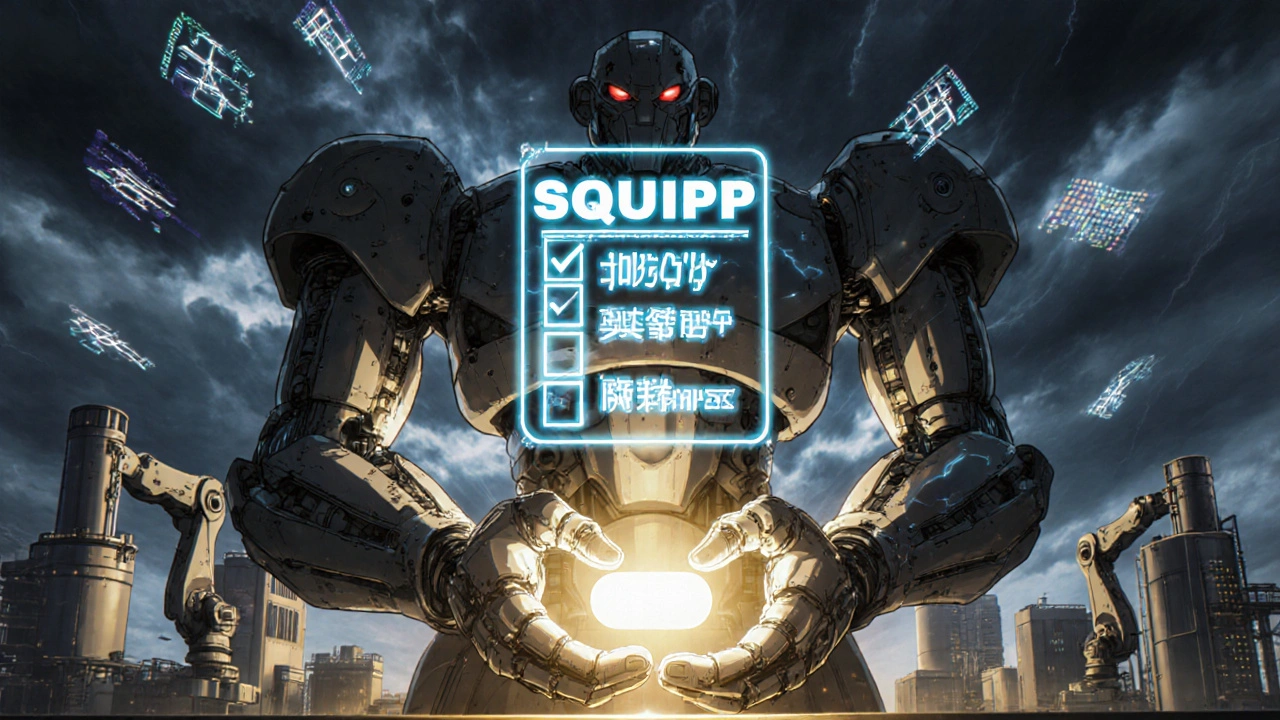
Generic drug manufacturers follow a strict checklist called SQUIPP: Safety, Quality, Identity, Potency, and Purity. Each letter stands for a non-negotiable requirement.- Identity: Does the pill contain the right active ingredient? This isn’t just about naming the chemical. It’s about proving the exact molecular structure matches the original. Techniques like infrared spectroscopy and high-performance liquid chromatography (HPLC) are used to detect even tiny differences - like a counterfeit using the wrong crystal form of a drug.
- Potency: Is there enough of the active ingredient to work? Too little and it won’t treat your condition. Too much and it could be dangerous. Each batch must release at least 80% of the drug within 30 to 45 minutes, as measured by dissolution testing.
- Purity: Are there harmful impurities? The 2018 valsartan recall happened because a toxic byproduct formed during manufacturing. Standard tests didn’t catch it. Now, labs use mass spectrometry to screen for over 50 potential contaminants.
- Quality: Is the pill made consistently? Every batch must perform the same. Statistical process control tracks more than 20 variables per step - temperature, pressure, mixing time - to keep the process stable.
- Safety: Is the product free from microbes, heavy metals, or foreign particles? Clean rooms must meet ISO Class 5 standards, meaning no more than 3,520 particles per cubic meter larger than 0.5 microns.
These aren’t suggestions. They’re legal requirements. If a company fails even one test, the entire batch is destroyed.
How Digital Tracking Stops Fake Pills Before They Reach You
Physical testing alone isn’t enough. Counterfeiters are getting smarter. Some fake pills now contain the right chemical, but are made with inferior fillers or wrong coatings. That’s where digital systems come in.The U.S. Drug Supply Chain Security Act (DSCSA) requires every prescription drug package to have a unique identifier - like a digital fingerprint. This code is scanned at every point: manufacturer, wholesaler, pharmacy, and finally, your hands. If a package doesn’t match the database, it’s flagged. This system works with 99.99% accuracy.
Companies use Electronic Quality Management Systems (eQMS) to track over 15,000 quality parameters per batch in real time. One major generic maker, Teva, reduced its deviation response time from 14 days to just 48 hours after switching to a cloud-based eQMS. But it cost $2.3 million and took 18 months to set up. Smaller manufacturers struggle with the price - $500,000 to $1 million for a single mass spectrometer.
Even so, adoption is growing. By 2023, 92% of the top 50 generic drug makers had full serialization. Only 45% of smaller companies have caught up. That gap is where counterfeiters still find room to operate.

Why Some Counterfeits Still Slip Through
No system is perfect. The biggest blind spot? Polymorphs. Some drugs can exist in different crystal forms - and only one form works correctly. A counterfeit pill might have the right chemical formula but the wrong crystal structure. Standard tests won’t catch it. That’s what happened in the valsartan recall. The drug was chemically identical, but the wrong form caused dangerous impurities.The European Medicines Agency (EMA) has a stronger safety net: every batch must be personally approved by a Qualified Person (QP) - a certified expert who signs off before release. The FDA relies more on process validation. Both work, but the QP system adds a human layer of accountability.
Another issue? Global supply chains. In 2023, FDA inspections found 94% compliance in U.S. facilities. But in India, it dropped to 78%. In China, it was 65%. Many counterfeit drugs originate from unregulated factories that cut corners to save money. Interpol’s 2022 Operation Pangea X seized $21 million in fake medicines - 78% of them falsely labeled as generics.
What Happens When Quality Control Works
When the system works, the results speak for themselves. Generic drugs account for 90% of all prescriptions filled in the U.S. - but only 23% of spending. Why? Because they’re safe and effective.The FDA reports a 0.02% adverse event rate for generics. Brand-name drugs? 0.03%. That’s not a coincidence. It’s proof that strict quality control prevents harm. The World Health Organization says countries with full GMP systems see counterfeit rates below 0.1%. In places without those systems, it’s 10% to 30%.
And it’s not just about safety. It’s about trust. A 2023 Deloitte survey found 98% of pharmaceutical executives plan to increase spending on quality control. Why? Because patients won’t use generics if they don’t believe they’re real.
What’s Next: AI, Blockchain, and Molecular Tags
The fight against counterfeits is evolving. The FDA is investing $150 million over the next four years to improve detection using AI and advanced analytics. Companies like IBM and Siemens are pouring $1.2 billion into AI-powered quality systems that can predict failures before they happen.In Africa, the WHO is testing blockchain to track antimalarial generics. Each pill’s journey is recorded on a tamper-proof digital ledger. In Europe, new regulations require quantum-resistant encryption on drug codes by 2026 - because future hackers could break today’s codes.
Even more promising? Molecular taggants. These are invisible markers, added at the molecular level, that can be scanned with a handheld device to confirm authenticity. Think of it like a hidden barcode only the right scanner can read. Early tests show 99.8% accuracy.
These tools won’t replace cGMP. They’ll strengthen it. The goal isn’t to catch every fake pill. It’s to make counterfeiting so hard and expensive that it’s not worth the risk.
How to Protect Yourself
As a patient, you can’t test a pill’s purity. But you can control where you get it.- Only buy from licensed pharmacies. Check your state’s pharmacy board website to verify a pharmacy is legal.
- Avoid websites that sell drugs without a prescription. The FDA found 96% of these sites sell fake or unsafe products.
- Look for the National Association of Boards of Pharmacy (NABP) Verified Internet Pharmacy Practice Sites (VIPPS) seal.
- If a generic looks different - color, shape, markings - ask your pharmacist. It might be a different manufacturer, but it’s worth checking.
Remember: a cheaper price doesn’t mean a riskier product. But an unverified source always does.
Are generic drugs as safe as brand-name drugs?
Yes, when they’re made under proper quality control. The FDA requires generics to have the same active ingredient, strength, dosage form, and route of administration as the brand-name version. They must also pass bioequivalence tests, proving they work the same way in the body. Adverse event rates for generics (0.02%) are nearly identical to brand-name drugs (0.03%), according to FDA data.
How do regulators know if a generic drug is counterfeit?
Regulators don’t rely on guesswork. They use a combination of physical testing - like HPLC and infrared spectroscopy - and digital track-and-trace systems. Each package has a unique serial code that links to a national database. If a package’s code doesn’t match, or if lab tests show impurities or wrong ingredients, the batch is recalled. The FDA also inspects manufacturing sites, with over 1,200 inspections in 2023 alone.
Can counterfeit drugs be made to look exactly like the real thing?
Yes, some counterfeiters now replicate packaging, color, and even imprint codes. But they often fail on deeper levels: wrong crystal forms, incorrect fillers, or impurities that standard tests miss. Advanced labs use mass spectrometry and molecular taggants to catch these. Still, the most reliable defense is digital serialization - a unique code on every package that can’t be copied without access to the manufacturer’s system.
Why are generic drugs cheaper if they have the same quality controls?
Generic manufacturers don’t have to repeat expensive clinical trials. They only need to prove their product is bioequivalent to the brand-name drug. That saves millions in R&D costs. They also face competition from multiple makers, which drives prices down. But their manufacturing standards are the same. The savings come from avoiding duplication of research, not cutting corners on safety.
What should I do if I think I received a fake drug?
Stop taking it immediately. Contact your pharmacist or doctor. Report it to the FDA’s MedWatch program at 1-800-FDA-1088 or online at fda.gov/medwatch. If you bought it online, report the website to the FDA’s Office of Criminal Investigations. Don’t throw it away - keep the packaging and pills as evidence. Your report helps regulators track and shut down counterfeit operations.
Sam txf
November 28, 2025 AT 19:57Let me get this straight - we’re trusting our lives to pills made in some back-alley lab in India because it’s ‘cheaper’? The FDA’s 78% compliance rate there isn’t a stat, it’s a death sentence waiting to happen. And don’t even get me started on how these ‘generics’ get shipped through third-party distributors who don’t even know what cGMP stands for. This isn’t capitalism, it’s Russian roulette with your heart medication.
And yeah, AI and blockchain sound fancy, but until we start nailing every single manufacturer - not just the top 50 - we’re just decorating a sinking ship. The real problem? We let corporations cut corners because we’re too lazy to pay $10 more for a pill that won’t kill us.
Wake up. This isn’t about science. It’s about greed dressed up as efficiency.
Michael Segbawu
November 29, 2025 AT 22:46Yall dont get it the usa is the only country that actually enforces quality control like its life or death the rest of the world is just playing dress up with regulations
india china they dont even know what a qualified person is they just stamp a label and ship it
if you buy from a website that dont have vipps seal you deserve what you get
generic drugs are safe if they come from america period end of story
Aarti Ray
November 30, 2025 AT 09:45I work in a pharmacy in Bangalore and I see this every day - people buy cheap generics because they can’t afford the brand, and we check every batch we get in
Some batches are fine, some aren’t - the problem is we don’t have the machines to test everything
Our lab has one HPLC machine that’s 15 years old and we’re lucky if it works two days a week
So we trust the paperwork - and sometimes that paperwork is wrong
I wish more people knew how hard it is here to do this right
Alexander Rolsen
December 1, 2025 AT 05:51Leah Doyle
December 1, 2025 AT 14:44This was so eye-opening 😭 I had no idea about polymorphs or molecular taggants - I just thought generics were cheaper because they were ‘copycats.’
But now I’m terrified about how many people are taking pills from sketchy websites. I just ordered a refill last week from a site that looked legit… should I be worried?
Also - the part about the QP in Europe? That’s so smart. Why don’t we do that here? Just one human being signing off? Feels like common sense.
Thank you for writing this. I’m going to share it with my mom. She’s on 7 meds and has zero idea what’s in them.
Alexis Mendoza
December 2, 2025 AT 18:11It’s funny how we think safety is a technical problem. It’s not. It’s a trust problem.
We don’t trust the system. We don’t trust the companies. We don’t trust the regulators. And when you don’t trust, you don’t take the medicine - even if it’s safe.
The real cost of counterfeits isn’t in labs or scanners. It’s in the silence of people who stop filling prescriptions because they’re afraid.
Maybe we need to fix trust before we fix the machines.
Michelle N Allen
December 2, 2025 AT 19:22So like... I get all this quality control stuff... but honestly... how many people even care? Most folks just want the cheapest pill that doesn’t make them throw up... and if it works... they don’t care if it was made in a basement in Bangladesh with a 1998 centrifuge...
Also... I read the whole thing... but I still don’t know what SQUIPP stands for... I think it’s like... Safety Quality Identity Potency Purity... but I’m not sure... and honestly... I just want to know if my blood pressure med is gonna work... not how many microns of dust are in the factory...
And why is everyone so obsessed with blockchain? Like... can’t we just... fix the basics first? Like... make sure the factories aren’t using expired chemicals? That’s... kind of the floor... not the ceiling...
Anyway... I’m just saying... maybe stop making it so complicated... and just make sure the pills don’t kill you... that’s it... that’s the whole goal... right?
Also... I think I’m gonna go take a nap now... this was a lot to read... and I have to go to work... in 20 minutes...
Thanks for the info... I guess...?
Madison Malone
December 3, 2025 AT 23:37I just want to say thank you to everyone who works in these labs and factories - the ones who check the temperature, the ones who calibrate the machines, the ones who sign off on batches at 2 a.m.
You don’t get headlines. You don’t get applause. But you’re the reason my grandma’s heart meds don’t kill her.
And to anyone reading this - next time you complain about a $4 generic, remember: someone somewhere is holding a pipette, making sure it’s safe. That’s worth more than a few dollars.
Graham Moyer-Stratton
December 4, 2025 AT 02:50tom charlton
December 4, 2025 AT 09:10While the technical and regulatory frameworks outlined in this post are indeed robust and commendable, I would like to emphasize the critical importance of international collaboration in pharmaceutical quality assurance.
It is imperative that regulatory bodies across jurisdictions - including the FDA, EMA, WHO, and national agencies in India, China, and beyond - engage in harmonized inspection protocols, data-sharing agreements, and joint training initiatives.
Furthermore, the deployment of advanced technologies such as blockchain and molecular taggants must be accompanied by capacity-building programs to ensure equitable access for low- and middle-income manufacturers.
Without a unified global approach, fragmented compliance will continue to create exploitable gaps - not merely for counterfeiters, but for public health itself.
Let us not mistake technological innovation for systemic integrity. True safety is born of cooperation, not just code.
Jacob Hepworth-wain
December 6, 2025 AT 05:52Great breakdown. I work in supply chain for a mid-sized generic maker. We spent $800k on our eQMS last year. It killed our budget.
But here’s the thing - we caught a bad batch before it shipped because the system flagged a 0.3% deviation in mixing time. No one would’ve noticed. Just a tiny lag. But that’s all it takes.
Small guys like us are getting crushed by the cost. We’re not cutting corners - we’re just trying to survive. If you want real change, help the small players. Not just the big names.
And yeah - buy from VIPPS sites. But also - tell your reps to pressure lawmakers to fund small-manufacturer grants. This isn’t just a tech problem. It’s a policy one.