

When doctors prescribe gabapentin or pregabalin for nerve pain, many patients expect relief - not dizziness so bad they can’t stand up, or a growing urge to take more than prescribed. These drugs, known as gabapentinoids, are among the most commonly prescribed medications for chronic pain, but their safety profile has changed dramatically in the last decade. What started as a straightforward treatment for epilepsy and neuropathic pain has become a complex issue of dosing, side effects, and misuse. The truth? For many people, the risks now outweigh the benefits - especially when dosing isn’t carefully managed.
How Gabapentinoids Are Supposed to Be Dosed
Gabapentin and pregabalin work differently than opioids, but they’re just as easy to misuse if not handled right. The FDA-approved starting dose for gabapentin in neuropathic pain is 300 mg once a day. That’s it. No need to jump to 1,200 mg on day two. The standard titration is slow: day one, 300 mg; day two, 300 mg twice a day; day three, 300 mg three times a day. Most patients never need more than 1,800 mg daily. In fact, a 2022 study from the American Academy of Neurology found that doses above 1,800 mg offered no extra pain relief - just more dizziness, fatigue, and risk of falls.
Pregabalin follows a similar pattern. Start at 75 mg twice daily. After a few days, bump it to 150 mg twice daily. Only if needed, go up to 300 mg twice daily - that’s 600 mg total. Anything beyond that? Not proven to help more. And yet, clinics still see patients on 4,800 mg of gabapentin a day. That’s not just risky - it’s dangerous.
Renal function changes everything. If your kidneys aren’t clearing the drug properly - which happens often in older adults or people with diabetes - even normal doses can build up. For someone with a creatinine clearance (CrCl) under 30 mL/min, the max daily dose should be 600 mg for gabapentin and 150 mg for pregabalin. Yet, many prescriptions ignore this. A 2023 GoodRx review found that nearly 40% of gabapentin prescriptions for patients over 70 didn’t adjust for kidney function. That’s not negligence - it’s routine.
Dizziness Isn’t Just an Annoyance - It’s a Fall Risk
If you’ve ever felt like the room’s spinning after taking gabapentin, you’re not alone. Dizziness affects 20% to 30% of users, according to the Mayo Clinic. But here’s what most don’t realize: the risk spikes with higher doses. At 900 mg a day, about 15% of people report dizziness. At 1,800 mg or more? That jumps to over 32%. And in people over 65? Rates climb to 40% or higher.
It’s not just about feeling off-balance. Dizziness from gabapentinoids increases the chance of falling - and falling as an older adult can mean broken hips, hospital stays, or even death. The American Geriatrics Society’s 2022 Beers Criteria specifically warns against using gabapentinoids in patients over 70 unless absolutely necessary. Why? Because the body doesn’t process the drug as well, and the brain becomes more sensitive to its sedating effects.
Real-world data backs this up. On Drugs.com, 41% of users stopped gabapentin because of dizziness. On Reddit’s pain forums, 78% of 1,245 users said dizziness was their biggest problem. One user wrote: "I was on 1,800 mg for sciatica. I couldn’t walk without holding the wall. Cut it to 900 mg - suddenly I could make coffee without falling." That’s not coincidence. It’s pharmacology.
The timing matters too. Dizziness usually hits hardest in the first week, right after a dose increase. That’s why experts now recommend stretching titration out: increase by 100-300 mg every 5-7 days, not every 2-3. And never take it at night if you’re already dizzy in the morning. The drug lingers in your system. A 300 mg dose at 10 p.m. can still be active at 8 a.m.
Misuse Is Real - and It’s Rising
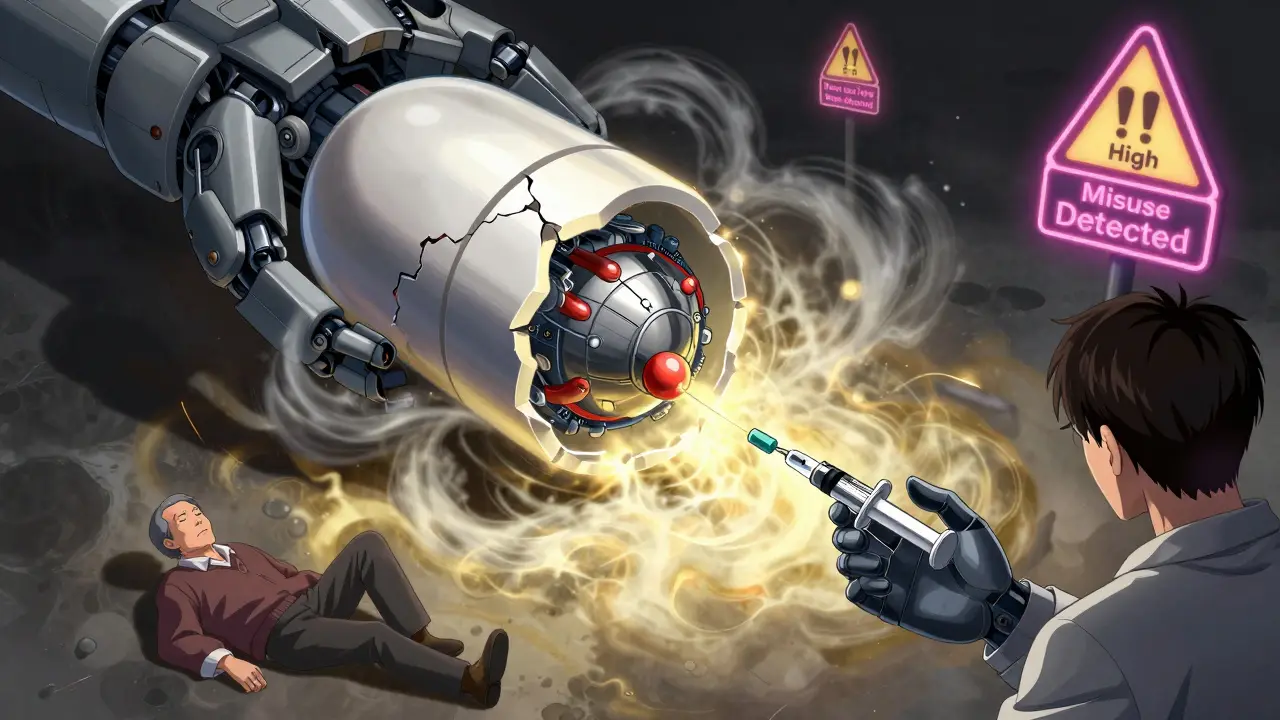
Here’s the uncomfortable truth: gabapentinoids are being used as a drug enhancer. Not for pain. For euphoria. Or to calm opioid withdrawal. The CDC reports a 497% increase in gabapentin-related overdose deaths between 2012 and 2020. In 2021, 15.5 million Americans misused prescription gabapentinoids - more than the number who misused oxycodone.
People with opioid use disorder are the most vulnerable. A 2022 study in Addiction found that 15-22% of those in recovery deliberately took gabapentin to boost the high from heroin or fentanyl. Others used it to ease anxiety and insomnia during withdrawal. But stacking gabapentin with opioids? That’s a recipe for respiratory depression - and death.
Some users don’t even realize they’re misusing it. They take 600 mg for nerve pain, then add another 600 mg because they feel "not enough." The drug’s sedating effect feels calming - until it doesn’t. One patient on PainForum.org described taking 4,800 mg daily: "I felt like I was floating. Then I blacked out and woke up in the ER." That’s not treatment. That’s addiction.
The FDA added misuse warnings to labels in 2019. Since then, 49 U.S. states have put gabapentin on their prescription drug monitoring programs (PDMPs). That means doctors can see if a patient is getting it from multiple clinics. But not all providers check. And not all pharmacies flag high doses. The system is patchy - and that’s why misuse keeps growing.
What Safe Prescribing Looks Like
The best way to prevent harm isn’t to stop prescribing gabapentinoids - it’s to prescribe them smarter. The CDC’s 2022 guidelines outline a clear, step-by-step approach:
- Screen first. Check kidney function (CrCl) and ask about substance use history. If someone has opioid use disorder, consider alternatives.
- Start low. Begin with 100-300 mg once daily. For elderly patients, start at 100 mg.
- Go slow. Increase by no more than 300 mg every 5-7 days. Don’t rush to 3,600 mg.
- Assess weekly. Ask: "Are you dizzy? Have you fallen? Are you taking more than prescribed?" Use a simple scale: 0 = no dizziness, 10 = too dizzy to stand.
- Stop when it works. If pain improves at 900 mg, don’t push to 1,800. More isn’t better.
- Taper before stopping. Quitting cold turkey can cause seizures. Reduce by 300 mg every 3 days.
The American Medical Association’s "START" protocol - Screen, Titrate, Assess, Review, Taper - is now the gold standard. It’s simple. It’s practical. And it saves lives.

The Bottom Line
Gabapentinoids aren’t inherently dangerous. But they’re not harmless either. When dosed properly - low, slow, and with kidney checks - they can help. When pushed to high doses, especially in older adults or those with addiction histories, they become a ticking time bomb. Dizziness isn’t just a side effect - it’s a warning sign. Misuse isn’t rare - it’s epidemic.
Patients need to know: if you’re dizzy, your dose might be too high. If you’re taking more than prescribed, you’re not alone - but you are at risk. Doctors need to stop seeing gabapentin as a "safe" alternative to opioids. It’s not. It’s a powerful drug with real dangers. The data is clear. The guidelines exist. What’s missing is consistent application.
For anyone currently on more than 1,800 mg of gabapentin or 600 mg of pregabalin daily - talk to your doctor. Ask if the dose is truly necessary. Ask about dizziness. Ask about alternatives. You don’t have to suffer. But you don’t have to risk your balance, your safety, or your life either.
Can gabapentin cause falls in older adults?
Yes. Dizziness from gabapentin is one of the leading causes of falls in older adults, especially those over 65. Studies show up to 40% of elderly patients experience significant dizziness at standard doses. The American Geriatrics Society recommends avoiding gabapentinoids in patients over 70 unless no other option exists, and if used, keeping doses below 900 mg daily.
Is 1,800 mg of gabapentin too much?
For most people with neuropathic pain, 1,800 mg daily is the upper limit for benefit. Studies from the FDA and American Academy of Neurology show no additional pain relief beyond this dose - only increased dizziness, fatigue, and fall risk. In fact, many patients get the same relief at 900-1,200 mg. Higher doses are rarely needed and often dangerous.
Can you get high on gabapentin?
Yes. While not as potent as opioids, gabapentin can produce a mild euphoric or sedated feeling, especially at doses above 3,600 mg. This is why it’s increasingly misused by people with opioid use disorder to enhance highs or ease withdrawal. The FDA added abuse warnings to labels in 2019 after reports of recreational use and overdose deaths.
How long does it take for gabapentin to cause dizziness?
Dizziness usually starts within the first week of treatment or after a dose increase. One study found 68% of dizziness cases occurred during the initial titration phase. It’s most common when doses are increased too quickly - like jumping from 300 mg to 1,200 mg in a few days. Slowing the titration to every 5-7 days can cut dizziness risk by half.
What should I do if I think I’m misusing gabapentin?
Talk to your doctor immediately. Don’t stop abruptly - that can trigger seizures. Instead, ask for a tapering plan. Most guidelines recommend reducing by 300 mg every 3 days. Also, consider a substance use screening. If you’re taking gabapentin to manage opioid withdrawal or get high, you may need addiction support. Programs like the American Society of Addiction Medicine’s protocols offer structured help for this exact situation.
Are there safer alternatives to gabapentin for nerve pain?
Yes. For neuropathic pain, options include duloxetine (Cymbalta), amitriptyline (an older tricyclic antidepressant), or topical lidocaine patches. For some, physical therapy, acupuncture, or cognitive behavioral therapy (CBT) can be just as effective without the risks. Gabapentinoids should be a last resort - not a first-line treatment - especially in older adults or those with addiction history.
What Comes Next?
If you’re a patient on high-dose gabapentin, ask your doctor about cutting back. If you’re a provider, review your prescribing habits. Check kidney function. Track dizziness. Use PDMPs. Follow START. The next time someone says, "I just need a little more," don’t say yes. Say: "Let’s talk about why."
Prescription drug monitoring programs now track gabapentin in 49 states. Abuse-deterrent formulations are coming. The CDC projects emergency visits will rise 12% annually through 2025 - unless we change how we prescribe. The tools are here. The guidelines are clear. What’s left is action.
tynece roberts
March 13, 2026 AT 14:43so i was on 2700mg of gabapentin for like 2 years for sciatica... i thought it was helping until i started falling over my own feet. like, literally tripping over air. my cat started judging me. anyway, cut it to 900mg and suddenly i can walk to the fridge without holding onto walls. dizziness isn't just 'mild side effect' - it's a full-on life disruption. also, why do docs just keep refilling this stuff like it's coffee? 🤦♀️
Hugh Breen
March 13, 2026 AT 16:36THIS. 🙌 I work in a pain clinic and I see this daily. One guy was on 6000mg daily. SIX THOUSAND. He said he "felt like a cloud". Then he fell down the stairs and broke his pelvis. 💔 We need better education, not just more pills. Doctors are stuck in the "it's safe!" mindset from 2010. Time to wake up. #STARTprotocol #gabapentinnotanoption
Byron Boror
March 13, 2026 AT 18:51Oh here we go again. Another anti-drug scare piece. People have been using gabapentin for decades without issue. You're just scared because opioids are harder to get now. Stop pathologizing normal pain management. If someone wants to take more, that's their choice. Government shouldn't be policing how much medicine you take. Freedom > fearmongering.
Jinesh Jain
March 14, 2026 AT 02:32Interesting read. I'm from India and we see a lot of gabapentin misuse here too, especially among young people trying to "chill out." But here's the thing - most clinics don't even check kidney function. I had a patient on 2400mg daily with CrCl of 22. No one asked. Just prescribed. We need simple guidelines printed on every script. Maybe a QR code linking to dosing charts? Simple fixes can save lives.
douglas martinez
March 14, 2026 AT 12:05As a healthcare professional, I appreciate the thoroughness of this post. The CDC guidelines and START protocol are evidence-based and should be universally adopted. However, implementation remains inconsistent due to time constraints, lack of training, and systemic pressures to prescribe quickly. I urge all providers to integrate these protocols into EHR workflows. Patient safety is not optional. Let's move from reactive to proactive prescribing.
Noluthando Devour Mamabolo
March 15, 2026 AT 08:39OMG YES. I'm a chronic pain patient with diabetic nephropathy (CrCl 28). My neurologist prescribed 1800mg daily. I asked if it was safe. He said "probably." I had to push back. After checking my labs, he cut me to 600mg. I'm not dizzy anymore. I can walk my dog. This isn't about fear - it's about renal pharmacokinetics. We need mandatory e-alerts in prescribing systems when CrCl <30. That's not rocket science. It's basic. #pharmacovigilance
Elsa Rodriguez
March 15, 2026 AT 17:04I was addicted to gabapentin. Like, full-on, crying, stealing from my mom's medicine cabinet addicted. I took 4800mg a day because I thought it "calmed my anxiety." Then I blacked out in Walmart. Woke up in the ER with my mom screaming. I lost my job. My boyfriend left. Now I'm in recovery. This isn't "just a side effect." It's a trap. If you're taking more than 1800mg and you're not in a hospital - you're not being treated. You're being exploited. I'm so glad someone finally said this.
Serena Petrie
March 16, 2026 AT 17:59So... don't take too much. Got it.
Buddy Nataatmadja
March 18, 2026 AT 05:35As someone who grew up in Indonesia where gabapentin was sold over the counter until 2020, I can tell you this problem isn't just American. We had entire villages with elderly people barely able to walk because of gabapentin dizziness. The solution? Education. Not bans. Teach patients. Train pharmacists. Make doctors check kidney function before writing the script. It's not complicated. It's just neglected.
mir yasir
March 18, 2026 AT 21:12The empirical data presented herein is indeed compelling; however, one must contextualize these findings within the broader pharmacoeconomic landscape. The ascendancy of gabapentinoid utilization stems not from clinical negligence, but from systemic underinvestment in non-pharmacological alternatives. To attribute this epidemic solely to prescriber error is to ignore structural determinants of care. A paradigm shift toward integrative pain management is required - not merely dosage restriction.