

Brown Bag Review Eligibility Checker
Medication Review Checklist
Answer these questions to see if you should schedule a brown bag medication review. The article explains that seniors taking 5 or more medications have a higher risk of dangerous interactions.
Every year, thousands of older adults end up in the hospital because of something simple: they took the wrong pill, too many pills, or a pill that shouldn’t have been taken with another. Many of these mistakes are preventable. One of the most effective ways to catch them before they cause harm is through a brown bag medication review. It sounds basic-bring all your meds in a brown bag to your doctor. But this simple step saves lives.
What Exactly Is a Brown Bag Medication Review?
A brown bag medication review is when you gather every single medication you take-prescription, over-the-counter, vitamins, supplements, and even herbal remedies-and bring them in a physical bag to your healthcare provider. The goal? To make sure nothing is missing, duplicated, or dangerous when mixed together.
This practice started in the early 1980s when pharmacists in the U.S. began handing out brown paper bags to patients. Why brown? Because it was the standard grocery bag at the time. Patients would fill it with their meds, and pharmacists would sit down with them to go through everything. Today, it’s not just a pharmacy trick-it’s a standard part of care for seniors in many U.S. healthcare systems, including Kaiser Permanente and Mayo Clinic.
Doctors and pharmacists aren’t just checking names and dosages. They’re looking for red flags: Are you taking two drugs that do the same thing? Are you on a medication that doesn’t even have a clear purpose anymore? Are you taking something that’s expired? Are you confused about why you’re taking it?
Why This Matters More Than You Think
Let’s talk numbers. According to the National Center for Health Statistics, over 89% of adults over 65 take at least one medication. More than half-54.6%-take five or more. That’s called polypharmacy. And it’s risky. The Institute for Safe Medication Practices estimates medication errors cost the U.S. healthcare system $528 billion a year, mostly because of hospitalizations that could have been avoided.
Here’s the scary part: when patients try to list their meds verbally, they get it wrong up to 87% of the time. A 2016 study by the Agency for Healthcare Research and Quality (AHRQ) found that out of every 10-15 patients who tried to recite their meds from memory, only 2 got it right. That’s not a mistake. That’s a system failure.
But when patients bring their actual pills? Accuracy jumps to 92-95%. Why? Because seeing the bottle tells you things you can’t remember: the strength, the instructions, the expiration date, the pharmacy name. Sometimes, you don’t even realize you’re still taking a drug your doctor stopped prescribing months ago.
What You Need to Bring
Don’t just grab your prescription bottles. Bring everything:
- All prescription medications (pills, liquids, inhalers, patches, eye drops)
- All over-the-counter drugs (pain relievers, sleep aids, antacids, cold medicine)
- All vitamins and supplements (even the ones you only take “a few times a week”)
- All herbal remedies and natural products (turmeric, ginkgo, fish oil, St. John’s wort)
- Any medications you’ve stopped taking but still have in the cabinet
Yes, even the little bottle of melatonin you take when you can’t sleep. Yes, even the ibuprofen you grab for your knee. Yes, even the gummy vitamins your grandkid gave you. If you’ve taken it in the last 30 days, bring it.
Pro tip: Don’t just throw them all in a bag. Keep them in their original containers. Labels have critical info: expiration dates, pharmacy contact info, and exact dosing instructions. A pill without a label can be impossible to identify.
What Happens During the Review
This isn’t a 5-minute chat. A proper brown bag review takes 30 to 45 minutes. You’ll sit down with a pharmacist, nurse, or doctor who will:
- Compare every item you brought to your medical records
- Check for dangerous interactions (like mixing blood thinners with herbal supplements)
- Look for duplicate medications (two different prescriptions for the same drug)
- Identify medications that are no longer needed
- Check for expired drugs or pills that have changed color or texture
- Ask you how you actually take each one-because sometimes, patients think they’re taking one dose, but they’re taking two
One real example from a 2023 Home Helpers Home Care report: A 79-year-old man came in with unexplained dizziness. He thought he was only taking one blood pressure pill. The review showed he was on two different beta blockers from two different doctors. He was getting a double dose. Once one was stopped, his symptoms vanished.
Another common finding? Patients taking three or more sedatives. Sleep aids, anxiety meds, muscle relaxers-all adding up. That’s a fall risk. That’s confusion. That’s a trip to the ER.

Why Self-Reports Fail
People think they know what they’re taking. They don’t.
A 2016 study by Dr. Barry D. Weiss found that when patients were asked to list their meds without bringing them, 80% of the time, they missed something. Sometimes it was a minor supplement. Other times, it was a critical drug like warfarin or insulin.
Electronic health records aren’t foolproof either. A 2023 study showed that even digital lists only captured 45-60% of actual medications. Why? Because patients don’t always tell their doctor about OTC drugs or supplements. Pharmacies don’t always share data with clinics. And sometimes, the doctor changes your prescription but forgets to update the system.
The brown bag method cuts through all that. It’s the only way to see the real picture.
Who Benefits the Most?
This isn’t for everyone. If you’re under 65 and take three or fewer medications regularly, you probably don’t need it. But if you’re over 65, especially if you see multiple doctors, have chronic conditions like diabetes or heart disease, or take more than five medications-you need this.
Here’s why: The average senior takes 4.7 prescription drugs and 1.9 OTC products. That’s a lot of moving parts. And the risk of a bad interaction goes up with every pill. The National Poll on Healthy Aging found that 44.6% of seniors are on five or more medications. That’s not normal aging. That’s a safety hazard.
And it’s not just about pills. It’s about understanding. A 2023 Home Helpers survey found that 72.4% of seniors said they understood their medications better after a brown bag review. That’s huge. If you don’t know why you’re taking something, you’re more likely to skip it-or take too much.
How to Prepare
Don’t wait until the day of your appointment. Start preparing a few days before:
- Go through every medicine cabinet, drawer, and bathroom shelf.
- Take out every bottle, box, and container-even if it’s empty.
- Write down the name of each medication and why you take it (if you know).
- Check expiration dates. If it’s expired, don’t throw it away yet-bring it.
- Put everything in a brown paper bag (or any bag, really-it’s the content that matters).
- Bring your list, your bag, and your questions.
Pro tip: If you’re worried about forgetting, ask a family member to help. Or set a calendar reminder. Some clinics even send reminder cards or make phone calls. According to AHRQ, reminders like these can boost compliance by up to 28%.
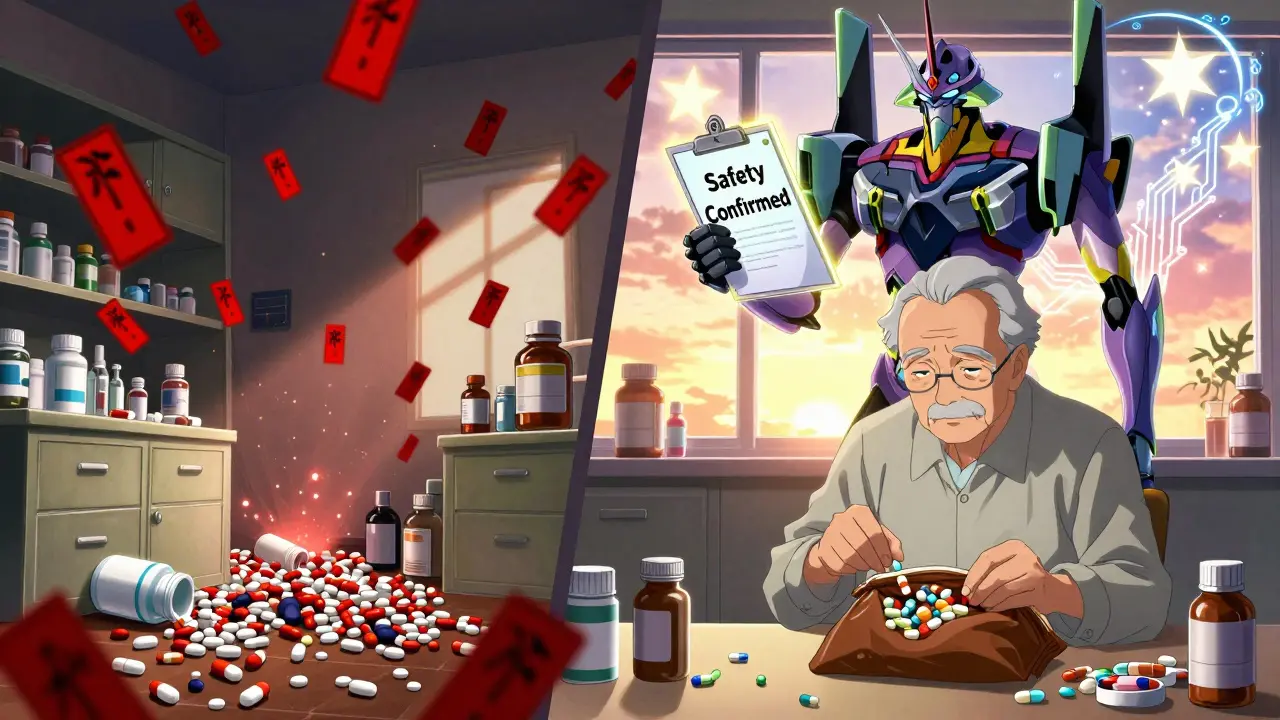
What If You’re Nervous?
Some people feel embarrassed. They think, “I shouldn’t have so many pills.” Or, “I forgot one-I look careless.”
Here’s the truth: Almost everyone brings more than they think. And no one is judged for it. This isn’t about blame. It’s about safety.
One patient told her pharmacist she was taking 14 different pills. The review found she didn’t need six of them. She was thrilled. She went from a 14-pill routine to a 7-pill routine. Less cost. Less confusion. Less risk.
Another patient was taking a supplement that interacted with his heart medication. He didn’t know. His doctor didn’t know. The brown bag review caught it. He avoided a hospital stay.
This isn’t about being perfect. It’s about being safe.
What Comes After the Review
The review doesn’t end when you leave the office. You’ll usually get a new, updated list of your meds. This is your new roadmap. Keep it. Share it with family. Bring it to every future appointment.
Many patients have medications discontinued after a review. In the Bexley and Greenwich pilot study from 1999, 63.8% of participants had at least one unnecessary drug removed. That’s not just savings-it’s relief. Fewer pills. Fewer side effects. Fewer trips to the pharmacy.
Some clinics now use apps to scan pill labels during the review. That’s helpful-but it doesn’t replace the bag. Why? Because 41.3% of errors in one 2024 study involved medications that weren’t in any electronic record. Only the physical bottle revealed them.
It’s Not Just for Seniors
While seniors benefit the most, this isn’t just for people over 65. Anyone taking five or more medications-regardless of age-should consider a brown bag review. That includes people with chronic pain, autoimmune diseases, or those recovering from surgery.
And it’s not just for clinics. Some home care agencies now offer in-home brown bag reviews. A nurse comes to your house, brings a checklist, and goes through your meds with you. It’s free for many Medicare Advantage plan members.
Final Thought: This Is Your Safety Net
Medications are powerful. They can save your life. But they can also hurt you if they’re not managed right. A brown bag review isn’t a chore. It’s your insurance policy.
It’s the one time in a year when someone sits down with you-not to rush you, not to hurry-just to make sure you’re not at risk.
Don’t wait for a fall, a hospital visit, or a bad reaction. Take the bag. Bring the pills. Ask the questions. You’ve already done the hard part-you’re alive and taking care of yourself. Now make sure your meds are helping, not hurting.
Do I need to bring every single pill, even if it’s expired?
Yes. Expired pills still matter. They help the provider know what you’ve been taking, even if you stopped. Sometimes, an expired medication can reveal a pattern-like switching brands or forgetting to refill. Bring it all.
Can I just bring a list instead of the actual pills?
A list is better than nothing, but it’s not enough. Studies show patients miss 80-87% of their medications when listing them from memory. Pills have labels with dosing, expiration dates, and pharmacy info that lists don’t. The physical review is the gold standard.
What if I forget to bring something?
It happens. Don’t cancel the appointment. Tell the provider what you forgot. They can still review what you brought and help you create a plan to get the missing items next time. The goal is progress, not perfection.
Is this covered by insurance?
Yes, for many Medicare Advantage plans and some Medicaid programs. Providers are often reimbursed $45-$60 per completed review. Ask your clinic if they offer it as part of your annual wellness visit.
How often should I do a brown bag review?
At least once a year. But if you’ve had a recent hospital stay, started new medications, or changed doctors, do it sooner. Some high-risk patients do it every 6 months.
Can I do this at home with a family member?
You can start by gathering everything and making a list. But the full review needs a trained professional-pharmacist, nurse, or doctor-who can check for interactions, dosage errors, and duplicate prescriptions. A family member can help you prepare, but they can’t replace the clinical review.
Annie Joyce
February 13, 2026 AT 15:23Y’all don’t know how many times I’ve seen this go sideways. My grandma brought in a brown bag once-turned out she was taking three different kinds of ibuprofen because three different doctors gave her prescriptions. One was for arthritis, one for headaches, one for ‘that tingling in her fingers’ (which was just nerve stuff). She’d been doubling up for years. After the review? She cut down to one, started physical therapy, and stopped falling asleep in the recliner after lunch. Life-changing. Bring the bag. Bring the chaos. Bring the expired gummy vitamins. They all matter.
Rob Turner
February 14, 2026 AT 13:02Love this. Reminds me of my uncle in Liverpool who took 17 pills a day. We did the brown bag thing at his kitchen table. Turned out he was still taking a blood thinner from 2012 after his bypass was done. The bottle was dusty. He’d forgotten. His GP? Never asked. UK’s NHS is great but sometimes the system just… forgets. Bring the bag. It’s the only thing that doesn’t lie. 🙌
steve sunio
February 15, 2026 AT 03:01lol so this is like a pharmacy version of hoarder therapy? you’re telling me we need a whole review because people can’t remember if they took their aspirin? smh. i’ve seen worse. like people taking 10 supplements because they read about it on tiktok. this is just lazy self-care. fix your brain first.
athmaja biju
February 16, 2026 AT 03:55Why is this even a thing in the US? In India, we just go to the local pharmacist and he tells us what to take. No bags. No reviews. Just common sense. You take medicine because your body needs it, not because you have 12 different bottles labeled ‘for heart’ and ‘for mood’ and ‘for dreams’. This is over-medicalization. We need less pills, not more paperwork.
Robert Petersen
February 18, 2026 AT 00:36This made me tear up a little. My dad’s 82 and he’s been doing this for 3 years now. He calls it his ‘medication date’-he brings the bag, we sit on the porch, and he tells me every pill’s story. ‘This one? That’s from the hospital after the fall. I didn’t even know I was on it.’ He’s cut down from 14 to 6. He sleeps better. He walks farther. This isn’t a chore. It’s a gift. Do it. Even if you think you’re fine. You’re not.
Craig Staszak
February 19, 2026 AT 10:44Just did this last week. Took me 2 hours to gather everything. Found 3 expired antibiotics from 2020. A bottle of melatonin I didn’t know I had. And a single pill of something called ‘Citalopram 20mg’-I didn’t even know what that was. Turned out my doc switched me to a different antidepressant but never told me to stop the old one. I felt dumb. Then I felt relieved. This system is broken. But the brown bag? It’s the duct tape holding it together.
alex clo
February 20, 2026 AT 20:29While the concept is sound, the term ‘brown bag’ is outdated. Most patients today use pill organizers, blister packs, or digital medication apps. The focus should shift to integrating these digital tools with EHRs rather than relying on physical bags. Paper bags are a relic, not a solution.
Joanne Tan
February 21, 2026 AT 03:01OMG I just realized I’ve been taking two different types of calcium supplements because I forgot one was from my sister. And I thought I was being so careful. I brought my whole medicine cabinet to my pharmacist yesterday and she laughed and said ‘this is Tuesday’. We cut out 4 things. I feel like I just got a whole new body. Also, my cat knocked over a bottle of fish oil and now I have a 3-inch puddle on the floor. Worth it.
Carla McKinney
February 23, 2026 AT 00:41Let’s be honest. This is just a way for clinics to bill Medicare. 45-60 bucks per review? That’s a cash cow. Most seniors don’t need this. They just need to stop taking supplements they got from infomercials. If you can’t keep track of your meds, maybe you shouldn’t be managing them alone. This isn’t empowerment. It’s institutionalized babysitting.