

When a brand-name drug’s patent runs out, you’d expect generics to flood the market right away-lowering prices, increasing access, and saving patients money. But that’s not how it works. In the U.S., the first generic company to challenge a patent gets a 180-day exclusivity period, during which no other generic can enter. This isn’t a reward for being first to market-it’s a legal loophole designed to push companies to take on risky, expensive lawsuits. And it’s often the reason why generic drugs don’t drop in price as fast as they should.
How the 180-Day Exclusivity Rule Actually Works
The rule comes from the Hatch-Waxman Act of 1984. Before this law, generic manufacturers couldn’t even start the approval process until a brand-name drug’s patent expired. That meant years of delay. Hatch-Waxman changed that. It let generic companies file an Abbreviated New Drug Application (ANDA) while the patent was still active-but only if they certified that the patent was invalid, unenforceable, or wouldn’t be infringed. This is called a Paragraph IV certification. The first company to file an ANDA with a Paragraph IV certification gets 180 days of exclusivity. During that time, the FDA can’t approve any other generic versions of the same drug. That’s it. No other company can sell a generic, even if their application is ready. The clock doesn’t start when the FDA approves the drug. It starts when the first generic hits the market-or when a court rules the patent is invalid or not infringed. Whichever comes first. This creates a strange race. Companies don’t just compete on price or quality. They compete on who files the paperwork first, who has the legal team to challenge a patent, and who can afford to wait out years of litigation. Sometimes, the first applicant doesn’t even launch the drug right away. They sit on the exclusivity, waiting for the brand-name company to settle or for the patent to expire. And while they wait, no one else can enter the market.Why This System Fails Patients
The whole point of Hatch-Waxman was to get generics to market faster. But in practice, the 180-day exclusivity often does the opposite. There are documented cases where the first generic applicant delays launching for years-sometimes more than five-while patent lawsuits drag on. During that time, the brand-name drug keeps selling at full price. Patients pay more. Pharmacies can’t switch. Insurers get hit with higher costs. In 2018, the FDA issued a clarification about buprenorphine/naloxone sublingual film, a drug used to treat opioid addiction. The first generic applicant had filed for exclusivity but didn’t launch the product for over two years. Because of how the law was written, no other company could enter-even though the patent had already been invalidated by a court. The exclusivity period hadn’t started yet because the drug hadn’t been commercially marketed. So the monopoly lasted over 24 months, not 180 days. This isn’t rare. A 2021 study found that in nearly 40% of cases where 180-day exclusivity was claimed, the first applicant delayed launch for over a year. In some cases, it was over three years. That’s not competition. That’s market control.Who Benefits-and Who Gets Left Out
The winner of the 180-day exclusivity period can make hundreds of millions of dollars. For a blockbuster drug like Lipitor or Humira, the first generic can capture 80% of the market in those six months. That’s why companies spend tens of millions on legal teams just to be first in line. But the losers are everyone else. Smaller generic manufacturers can’t afford the legal gamble. They don’t have the resources to challenge a patent. So they wait. And wait. And wait. Meanwhile, the brand-name company often makes deals with the first generic applicant to delay launch even longer. These are called “pay-for-delay” settlements. The brand pays the generic not to compete. The FDA says these are anti-competitive. Courts have ruled them illegal in some cases-but they still happen. The system also punishes patients who need cheaper versions of drugs. Take insulin. Or asthma inhalers. Or HIV medications. When the first generic sits on exclusivity, people are stuck paying $300, $500, or more for a prescription that could cost $20. The 180-day exclusivity isn’t helping access. It’s creating artificial scarcity.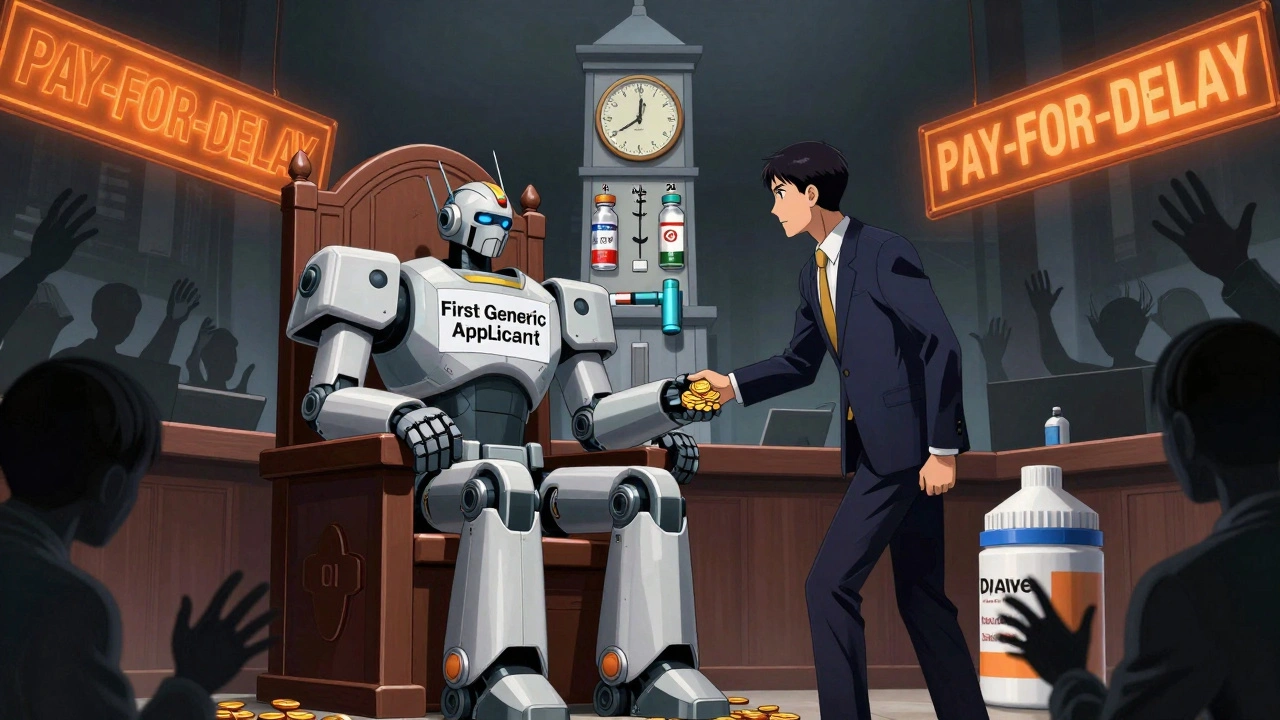
What the FDA Is Trying to Fix
In March 2022, the FDA proposed a major change. They want the 180-day clock to start only when the first generic actually hits the shelves. No more waiting for court decisions or filing dates. If the company doesn’t launch within a certain time-say, 75 days after a court rules in their favor-they lose the exclusivity. That way, the market opens up faster. They also proposed a new rule: if a company launches more than five years before the patent expires, they get 270 days of exclusivity instead of 180. Why? Because if they’re challenging a patent that’s still far from expiring, they’re taking on more risk. The FDA thinks they deserve a bigger reward. There’s another twist: if multiple companies file on the same day, and they’re all first applicants, the exclusivity gets split. The first one to launch gets 90 days. The others get the remaining 90 days. That’s a small step toward fairness. But here’s the catch: these rules aren’t law yet. They’re proposals. Congress hasn’t voted on them. The FDA can’t enforce them without new legislation. So for now, the broken system stays in place.What This Means for Generic Drug Manufacturers
For generic companies, the stakes are enormous. Filing an ANDA with a Paragraph IV certification isn’t just paperwork. It’s a legal bet. You need to prove the patent is invalid. That means hiring patent lawyers, running lab tests, digging through old patent filings, and preparing for a lawsuit that could last five years. You also need to watch your back. The Medicare Modernization Act of 2003 added forfeiture rules. If you don’t launch within 75 days after a court decision, or if you withdraw your application, or if you fail to get FDA approval within 30 months, you lose your exclusivity. One mistake-and you’re out. That’s why most companies don’t go it alone. They work with regulatory consultants, patent attorneys, and compliance teams. They track every deadline. They prepare for every possible outcome. And they still get burned sometimes.
Is There a Better Way?
The European Union doesn’t have a 180-day exclusivity rule. Neither does Canada or Australia. In those countries, as soon as a patent expires, multiple generics can enter at once. Prices drop fast. Patients get access. The system is simpler. And it works. The U.S. could adopt a similar model. Let the first company to file get priority-but don’t give them a monopoly. Let the FDA approve all qualified generics as soon as the patent expires. Let competition drive prices down. That’s what Hatch-Waxman was supposed to do. But the 180-day exclusivity turned it into a game of legal chess, where the players are big corporations and the board is made of patient wallets. The fix isn’t complicated. Stop letting one company hold the market hostage. Start rewarding speed and efficiency-not legal maneuvering. The technology to approve generics quickly exists. The will to use it doesn’t.What Patients Can Do
If you’re on a brand-name drug that’s about to go generic, don’t assume the price will drop right away. Check with your pharmacist. Ask if the first generic has launched. If not, ask why. You have a right to know. Advocate for change. Contact your representatives. Ask them to support FDA proposals that end the 180-day delay tactic. Push for transparency in drug pricing. Demand that generic competition isn’t held hostage by legal games. The 180-day exclusivity rule was meant to help you. But for decades, it’s helped the few at your expense. It’s time to fix it.What triggers the 180-day exclusivity clock for a generic drug?
The clock starts on the earliest of two dates: the day the first generic drug is commercially marketed, or the day a court rules that the challenged patent is invalid or not infringed. It doesn’t start when the FDA approves the drug or when the ANDA is filed. The exclusivity period runs regardless of whether the patent litigation is still ongoing.
Can a generic company lose its 180-day exclusivity?
Yes. Under the Medicare Modernization Act of 2003, a company can forfeit exclusivity if it fails to market the drug within 75 days after a court decision, withdraws its ANDA, doesn’t get FDA approval within 30 months of submission, or if the FDA determines the application wasn’t substantially complete when filed. These forfeiture rules are strict and have been the subject of multiple legal challenges.
Why does the FDA allow delays in generic market entry?
The FDA doesn’t allow delays by choice-it’s bound by the Hatch-Waxman Act as written. The law gives exclusivity to the first applicant to challenge a patent, even if that applicant doesn’t launch the drug for years. The FDA has repeatedly called this a flaw and proposed reforms to ensure exclusivity lasts only 180 days from actual market entry, not from patent litigation start dates.
How is 180-day exclusivity different from other types of drug exclusivity?
Other exclusivities-like 5-year new chemical entity exclusivity or 3-year exclusivity for clinical data-are granted to brand-name companies and block ANDA submissions entirely. The 180-day exclusivity is only for generic companies and doesn’t block ANDA filings. It blocks FDA approval of other ANDAs until the exclusivity period ends. It’s the only exclusivity that rewards patent litigation, not innovation.
Are there alternatives to the 180-day exclusivity system?
Yes. Countries like Canada, the UK, and Australia allow multiple generics to enter immediately after patent expiration. There’s no exclusivity period. Prices drop faster, and competition is immediate. The U.S. system is an outlier. The FDA’s 2022 proposal to tie exclusivity to actual market launch is a step toward aligning with global norms.
James Kerr
December 2, 2025 AT 17:37Man, I just paid $400 for my asthma inhaler last month. If this system is still going, I’m done. One company sitting on a drug while people suffer? That’s not capitalism, that’s cruelty.
Ignacio Pacheco
December 4, 2025 AT 03:53So let me get this straight: the law rewards lawsuits instead of drugs? And we wonder why healthcare is broken? This isn’t a loophole-it’s a feature designed by lawyers who don’t have to take insulin.
Jim Schultz
December 5, 2025 AT 17:28Oh, please. The FDA’s ‘proposals’? Ha! They’ve been ‘proposing’ fixes since 2003-and yet, here we are, watching the same 180-day shell game play out with Lipitor, Humira, and now, insulin. This isn’t regulatory failure-it’s corporate capture, and the FDA is just the janitor cleaning up after the party.
Katherine Gianelli
December 7, 2025 AT 04:39I work with patients who can’t choose between their meds and rent, and this system? It’s not just broken-it’s violent. The idea that someone should wait years for a $20 drug because a corporation played legal chess… I can’t unsee it. We need to tear this down and start over.
Kara Bysterbusch
December 9, 2025 AT 01:53The structural irony here is breathtaking: the Hatch-Waxman Act was conceived as a bridge between innovation and access, yet it has become a moat protecting monopolistic rents under the guise of incentivizing litigation. The 180-day exclusivity, far from promoting competition, functions as a regulatory capture mechanism-where the legal apparatus, intended to democratize access, instead entrenches the very power structures it was meant to dismantle. The FDA’s 2022 proposal, though tepid, at least acknowledges the dissonance between legislative intent and market reality. Yet without congressional intervention, these are merely administrative sighs in a hurricane of profit-driven inertia.
Albert Essel
December 10, 2025 AT 22:56Canada and the UK don’t have this exclusivity mess-and their generic prices drop within weeks. The U.S. system isn’t just outdated; it’s an outlier built on legal theater. Why do we still pretend this is about innovation when it’s clearly about delay?
Kidar Saleh
December 12, 2025 AT 18:15Let me tell you about my cousin in Manchester-she takes HIV meds. When the generic came, it took 14 months. Fourteen months. Her insurance didn’t cover the brand. She skipped doses. She got sick. This isn’t policy. This is neglect dressed up as law. And the worst part? No one’s even surprised anymore.
parth pandya
December 14, 2025 AT 09:53i think this is so wrong. why dose the first company get to hold the market? i work in a pharmacy and people cry when they cant afford the drug even after patent expires. the system is broken. fix it. plz
Chloe Madison
December 16, 2025 AT 02:57Every time I see someone choose between their medication and groceries, I remember this rule. We’re not just talking about dollars-we’re talking about lives. If we can approve a new vaccine in 11 months, we can approve a generic in 11 days. The will exists. The will to care? That’s what’s missing.
Myson Jones
December 16, 2025 AT 12:00Just wanted to say thanks for laying this out so clearly. I’m not a policy expert, but I’ve seen firsthand how this affects families. It’s not about who filed first-it’s about who needs the drug first. Maybe it’s time we stopped rewarding lawsuits and started rewarding patients.